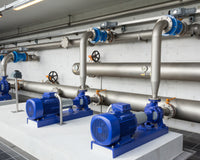

Water pumps can replace water supply and sewage systems. They make it possible to deliver drinking water to your home, pump it at high pressure to a designated location, and remove waste from household toilets. Garden pumps are used to draw water from natural reservoirs, which is then used to water plants. In places without access to electricity, petrol-powered pumps are ideal. Regardless of the type and function of a water pump, it must be properly maintained. So how should you do that?
Protect the pump from corrosion and use sealing fluids
Due to the environment in which it operates, a water pump is primarily exposed to corrosion. To prevent this, use suitable coolants with a sufficient amount of antifreeze. Do not contaminate the cooling system with aggressive substances, and do not mix different fluids. Ensure that the pump is properly sealed by using suitable products, while remembering not to overuse them.
How can mechanical damage be prevented?
Another factor contributing to failures of the deep-well water pumps we offer is various types of mechanical damage. To avoid overheating the engine and damaging the head gasket, do not tension the belt too tightly. When installing or removing the pump, use only tools intended for this purpose. To prevent the toothed belt from jumping or breaking, do not tension it either too tightly or too loosely. It must run in a straight line, and the tensioning and guide pulleys must be properly installed.
It is also worth remembering that water with too much calcium causes individual pump components to become calcified. Adding demineralized water can help. Otherwise, you should expect damage such as damage to the head gasket, cooling lines, thermostat, and slip ring, as well as engine overheating. Our range includes high-quality deep-well and circulation pumps, pressure tanks, sewage pumps, and drainage pumps.