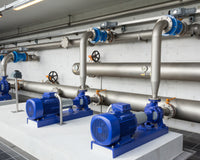
Submersible pumps are innovative devices commonly used to pump utility or drinking water directly from boreholes and ring wells. Depending on our needs, we can choose from various types, which differ in terms of their parameters and available features. However, every option is durable and solid, thanks to the use of high-quality materials and modern design solutions. But are submersible pumps resistant to sand? Can contact with sand damage their mechanism and, consequently, disrupt their operation? You will find the answers to these questions in our article.
Pumps and sand resistance
For most available pumps, manufacturers warn that contact with sand can negatively affect the device’s operation. This is the case despite the fact that the pump is made from suitable materials. Most pumps therefore cannot come into contact with so-called dirty water, meaning water containing harmful contaminants—including sand. Why does this happen? The reason is the pump’s hydraulic system, which primarily consists of impellers and diffusers installed closely together on the shaft. If sand enters through the so-called inlet, individual particles will get between the hydraulic components mentioned above. This, in turn, can cause the device to seize and fail, and sometimes even become completely damaged.
An innovative solution
However, it turns out that submersible pumps operate according to a different, more advanced principle. Their construction is designed to handle everyday challenges, including pumping water containing smaller or larger amounts of sand. How is it possible that the construction of submersible pumps is resistant to this type of contamination? The key lies in three main elements. First, submersible pumps use so-called floating impellers. Second, the entire system is made from highly durable, technologically advanced materials resistant to abrasion and other minor mechanical damage. Third, the distance between the individual hydraulic components mounted on the pump shaft has been increased, which enhances its capabilities.
All this means that sand grains do not come into direct contact with the impellers and diffusers, helping to prevent them from seizing and becoming damaged. When choosing a submersible pump suited to our needs, it is therefore worth checking its description and technical specifications to find out the permissible sand content per unit of water.
Our offer
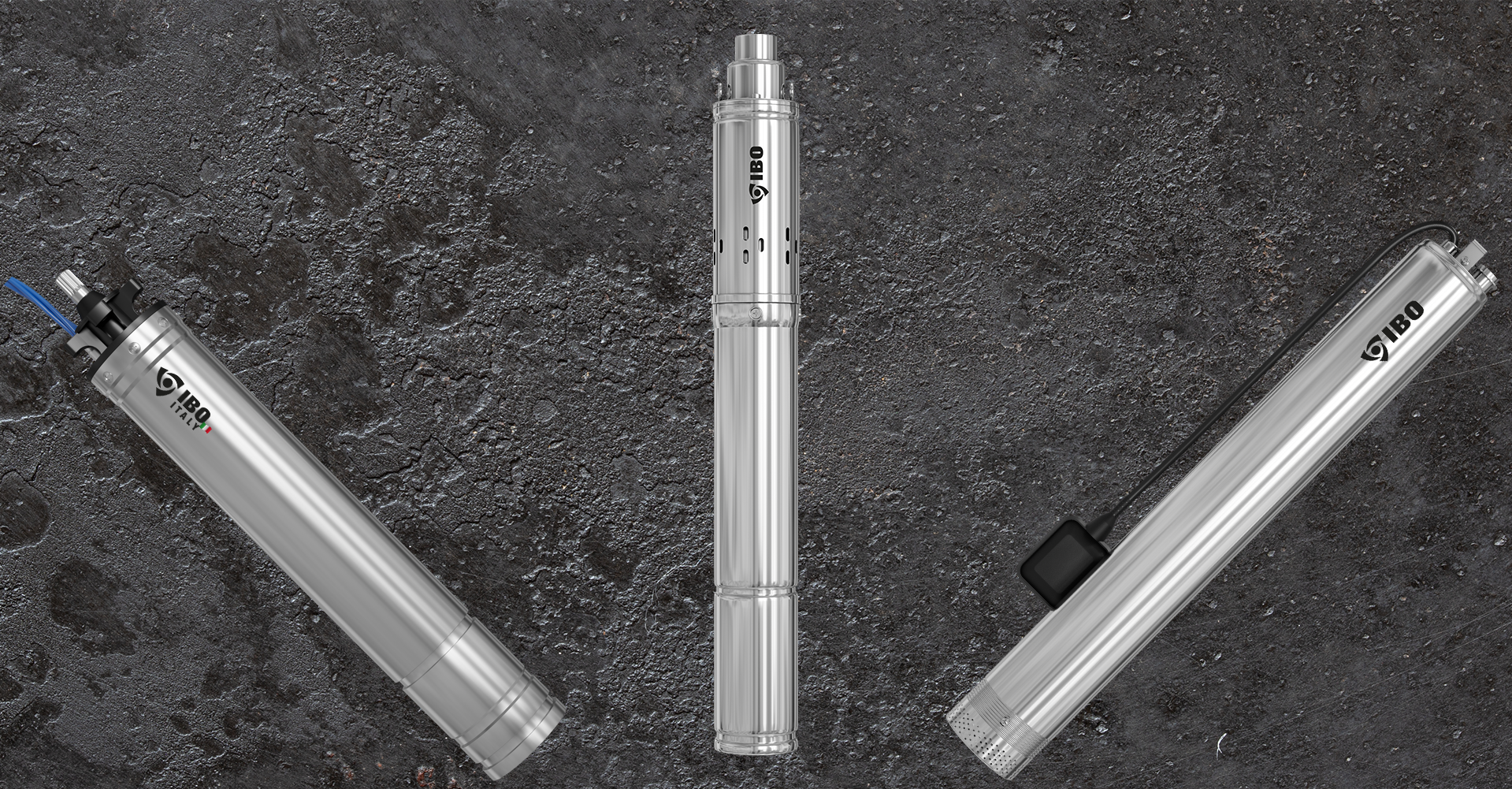
If you are looking for a submersible pump that will perform its function perfectly and also work well when sand is present in the water, you have come to the right place. Our range includes IBO Italy submersible pumps, which combine many functions and are known as devices “for special tasks.” Individual models also feature increased resistance to sand, making them suitable even for difficult conditions. They can be used not only in single-family homes but also in various types of industrial facilities and agricultural holdings. All our products are manufactured in Italy, so they are based on the best components and modern technological solutions. On our website, you will find options for owners of small houses or recreational plots, water supply systems, irrigation systems, as well as professional applications, including fire protection systems and industry.
Particular attention should be paid to the 4SDm and 4SD anti-sand submersible pumps, which perform well in all conditions. These products are equipped with a special mechanism that does not seize during operation. They are therefore an excellent solution to the problems most commonly associated with deep wells.