Pumps are essential devices in many water systems—from domestic heating systems and drainage to industrial applications. In this article, we explain how the most popular types of pumps differ, including: submersible well pumps, sewage pumps, circulation pumps, circulating pumps, boiler pumps, industrial pumps, and others. This will make it easier for you to choose the right device for your needs!
1. Submersible well pump (submersible well pumps, submersible well pump, deep-well pump)
Submersible well pumps are designed to pump water from great depths, for example from a deep well. They are placed below the water level, which prevents cavitation and increases the device’s operating efficiency. They are ideal for supplying single-family homes, irrigation systems, and farms. They are characterized by high performance and corrosion resistance thanks to the use of durable materials.
2. Sewage pump
A sewage pump is used to pump waste from household septic tanks. It is resistant to aggressive liquids, contaminants, and suspended solids present in wastewater. These devices are often equipped with overload protection and special impellers designed to handle dense media. This is an indispensable solution for regularly emptying waste tanks.
3. Sewage pump with grinder (pump with grinder, dirty-water pump with grinder)
This is a version of a sewage pump equipped with a mechanism for shredding larger contaminants. It effectively breaks down solid elements such as paper and organic waste, minimizing the risk of clogged pipes. It is ideal for demanding conditions where large amounts of solid contaminants are present. A pump with a grinder is also an excellent choice for households and small industrial facilities.
4. Circulation pump (domestic hot water circulation pump)
Circulation pumps are mainly used in domestic hot water (DHW) systems. They maintain a constant flow of hot water through the system, providing immediate access to hot water when the tap is turned on. They reduce energy and water losses, resulting in lower bills and greater user comfort. Modern models often feature automatic control functions, which further increase system efficiency.
5. Circulating pump (circulating pumps, DHW circulating pump)
Circulating pumps force water to flow through central heating or DHW systems. They ensure that heat from the boiler is evenly distributed to all radiators in the building. This is a key component of every heating system, ensuring efficient and stable operation. Modern circulating pumps often offer an energy-saving mode and quiet operation.
6. Ring-well pump
Ring-well pumps are designed to pump water from shallower sources, such as ring wells. Their construction allows them to operate efficiently at shallow water levels, making them an ideal solution for single-family homes and recreational plots. They are also often used for watering gardens and supplying irrigation systems. These models are easy to install and service.
7. Boiler pump (DHW pump)
A boiler pump is simply a circulating pump designed to operate in central heating systems. It ensures efficient circulation of the heating medium between the boiler and radiators. As a result, room temperatures remain even and the boiler operates at optimum efficiency. Modern boiler pumps are characterized by high energy efficiency and quiet operation.
8. Surface pump
Surface pumps are installed outside the tank and draw water from shallow sources. They are ideal for garden irrigation, supplying domestic systems, and pumping rainwater. Their advantage is easy installation and maintenance—they do not need to be submerged in water. Depending on the model, they can operate at different flow rates and pressures, adapting to the user’s individual needs.
9. Positive displacement pump
Positive displacement pumps transport liquid by mechanically moving a defined volume of medium. They are used in precise applications such as dosing liquids in the chemical, food, and pharmaceutical industries. They can transport liquids with different viscosities, as well as liquids containing solid particles. They provide accurate and stable operating parameters, even under changing process conditions.
10. Industrial pumps
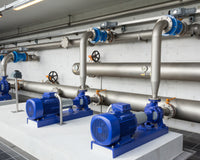
Industrial pumps are high-performance devices used in large production systems and industrial plants. They are characterized by high capacity, corrosion resistance, and the ability to operate in harsh conditions. They handle a wide range of liquids, from water and chemicals to aggressive and abrasive fluids. Their construction enables long, trouble-free operation with minimal maintenance.
11. Vertical pumps
Vertical pumps are distinguished by their compact design and vertically positioned impeller. As a result, they take up less space, which is important in installations with limited room. They are mainly used in water supply systems, industrial installations, and pressure-boosting systems. Their advantages include high performance, the ability to operate at high pressure, and easy servicing.
Summary
Choosing the right pump depends primarily on its intended use, the type of medium being pumped, and the installation conditions. Pumps for clean water have different requirements from those for dirty water or wastewater. We hope our guide has helped you better understand the differences between popular types of pumps. If you need help selecting a device, contact our Dambat experts!
Frequently Asked Questions (FAQ)
Which pump should I choose for a deep well?
A submersible well pump is the best choice for a deep well. It operates below the water level and is designed to work at great depths. It provides high performance and corrosion resistance, ensuring long-term use.
What is the difference between a sewage pump with a grinder and a standard sewage pump?
A sewage pump with a grinder has an additional mechanism that shreds larger solid contaminants. This minimizes the risk of clogging the system, which is particularly important when discharging wastewater containing solid matter.
What is a circulation pump used for?
A circulation pump maintains a constant flow of hot water through the system, providing immediate access to hot water at the points of use. This solution improves user comfort and reduces water consumption.
When should I choose a surface pump?
Surface pumps are ideal for use with shallow water sources, for example, to water a garden or supply domestic water systems. They are easy to install and maintain and allow the flow rate to be flexibly adjusted to meet specific needs.
What are industrial pumps used for?
Industrial pumps are used in large installations such as production plants and wastewater treatment facilities. Thanks to their high performance and resistance to harsh operating conditions, they are suitable for transporting various liquids, including aggressive chemicals.
What distinguishes vertical pumps?
Vertical pumps feature a compact design and vertically positioned impeller, which saves space in the installation. They are efficient and often used in water pressure-boosting systems and industrial circulation systems.