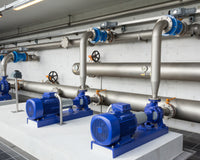
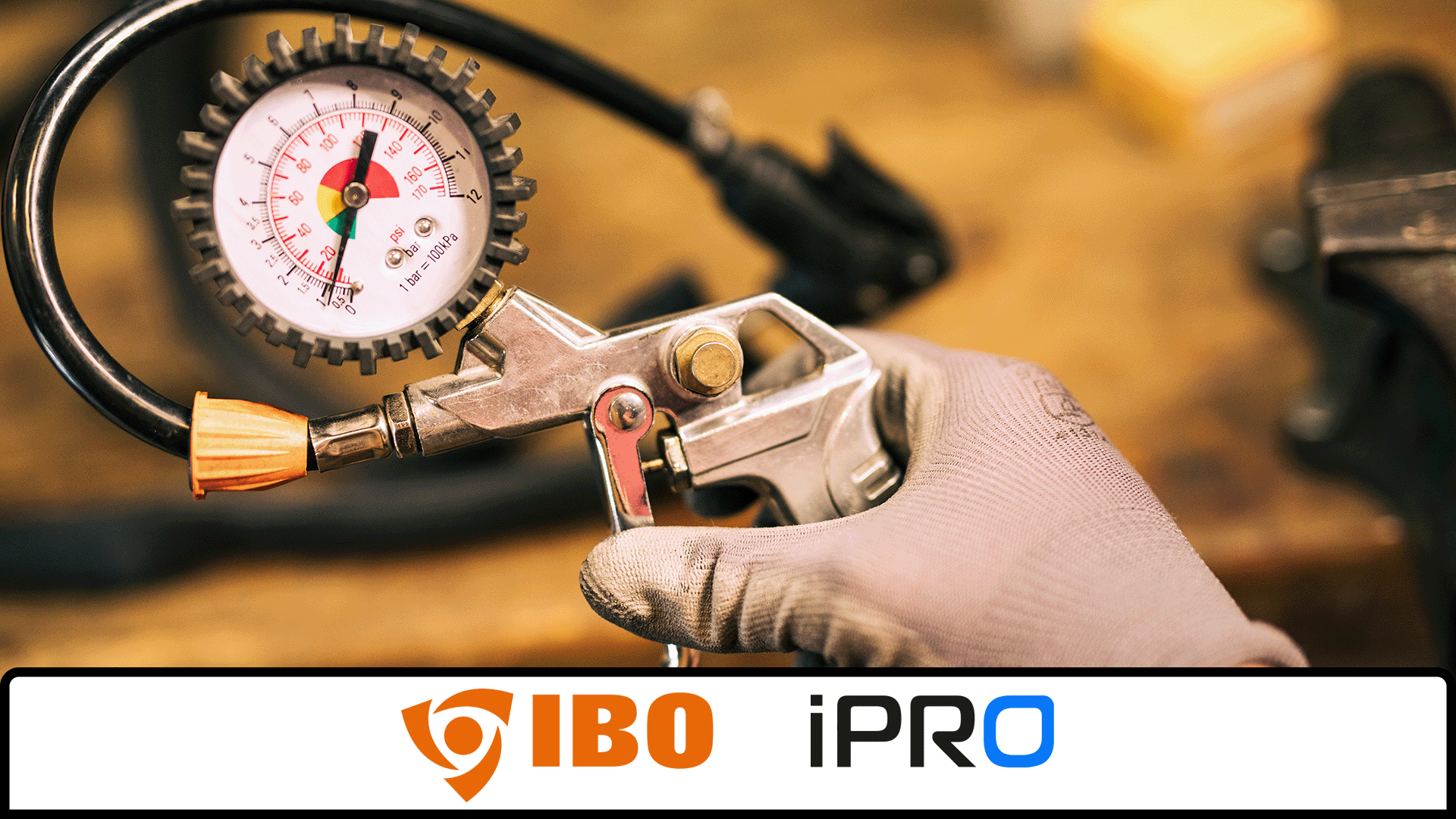
Dambat, as a manufacturer of pumps and hydraulic systems under the IBO, IBO Italy, and IPRO brands, does not sell air compressors. Instead, we specialize in equipment designed to transport liquids, including submersible, pressure-boosting, and circulation pumps. However, for those interested in compressors, we have prepared the following guide explaining how a compressor works, its types, and the differences between air pressure and hydraulic pressure.
What is a compressor?
A compressor (that is, an air compressor) is a device that draws in air from the surroundings, compresses it to a higher pressure, and then stores it in a tank. In practice, it is used to power pneumatic tools, inflate objects, paint, and clean.
Depending on capacity and application, the following types can be distinguished:
- 12V compressor – small and portable, often used in cars,
- 24l compressor and 50l compressor – for home workshops,
- 100l compressor and 150l compressor – semi-professional models,
- 200l compressor and 300l compressor – for industry and large facilities,
- twin-piston compressor – equipped with two pistons, making it faster and more efficient,
- oil-lubricated compressor – quieter, with a longer service life, but requiring maintenance,
- screw compressor – used in industry, operating continuously and steadily.
The terms compressor and air compressor are used interchangeably – they refer to the same device.
How does an air compressor work?
A compressor works by reducing the volume of air while simultaneously increasing its pressure. This process is carried out using a piston (in piston compressors) or screws (in screw compressors).
Once compressed, the air enters the tank, from where it can be dispensed through valves to power pneumatic tools. A typical air compressor reaches a pressure of 6 to 10 bar, although industrial models such as the 200l compressor or 300l compressor may operate at higher pressure.
Compressor pressure versus pressure in a hydraulic system – differences
Although both compressed air and liquids transfer energy in pressurized systems, there are significant differences between them:
- Air is compressible – its volume changes with pressure. As depth increases (for example, in a tank), the pressure rises slowly.
- Water and other liquids are practically incompressible – pressure increases very quickly with depth or force.
- Example: at a depth of 10 meters, the pressure in water is approximately twice as high as at the surface, whereas in the atmosphere, one must rise several kilometers for the pressure to drop by half.
For this reason, air compressors and hydraulic systems are designed in completely different ways. In hydraulic pumps, it is crucial to ensure high resistance to static pressure, while in compressors, the safety of pressure tanks and valve systems is the priority.
Frequently asked questions (FAQ)
Does Dambat offer air compressors?
No. Dambat does not offer air compressors. The company specializes in manufacturing water pumps and hydraulic equipment.
What is the difference between a 50l compressor and a 100l compressor?
The main difference is tank capacity – the 100l compressor can operate continuously for longer and is suitable for more demanding tasks than the 50l compressor, which is suitable for lighter household applications.
What pressure does a compressor reach?
A typical air compressor reaches a pressure of 6–10 bar. Industrial models, such as the 150l compressor or 300l compressor, may operate at higher pressure, depending on their design.
What is a twin-piston compressor?
A twin-piston compressor is a model with two pistons, which increases its efficiency and the speed at which it compresses air. It is used in workshops and for intensive applications.
The text above is for informational purposes only. Dambat does not sell compressors or air compressors. Trademarks and technical data belong to their respective owners.