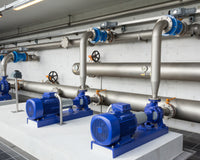
Stainless steel pumps – indispensable in industry and agriculture
Stainless steel is currently one of the most sought-after materials in the production of industrial and agricultural equipment. Its corrosion resistance, high durability, and unique properties have made it dominant in the market for pumps, tanks, and water and sewage systems. Stainless steel products are used both in modern industrial plants and on farms, where equipment reliability is crucial.
The wide use of stainless steel results from its physicochemical properties. Industrial applications of stainless steel include liquid transport systems, storage tanks, pipelines, and pumps. In agriculture and construction, its good resistance to changing weather conditions and aggressive chemical environments is particularly valued. As a result, stainless steel, ideal for such applications, is now standard in projects requiring durability and safety.
Pumps made of this material are designed to operate under conditions requiring high resistance. Stainless steel requires the appropriate selection of alloys, so different grades of stainless steel are used depending on the operating environment. The most common are austenitic stainless steel, ferritic stainless steel, and martensitic stainless steel.
INOX – the highest-quality steel in pump manufacturing
INOX stainless steel is a material that enjoys great recognition in the industrial sector. INOX is characterized by exceptional corrosion resistance and high resistance to extreme temperatures, making it suitable for chemically aggressive environments and those exposed to continuous contact with moisture. Thanks to the addition of chromium, nickel, and molybdenum, it significantly increases steel resistance and extends stainless steel service life.
The smooth, easy-to-clean surface of stainless steel is extremely important in food industry applications. The highest-quality INOX stainless steel meets stringent hygiene standards, including HACCP, allowing it to be used in the production of milk, beer, beverages, and other food products. Stainless steel products are also used in pharmaceutical plants, where cleanliness and resistance to aggressive chemicals are priorities.
Grades and properties of steel used in pumps
Various grades of stainless steel are used in pump production, selected according to their intended application. Austenitic steel is chosen most often because of its ductility and austenitic structure, which ensure ease of processing and welding. In areas highly exposed to chemical substances, acid-resistant stainless steel is used, including the popular AISI 316. Its chemical resistance and ability to operate in chloride environments make it indispensable in chemical industry applications.
Ferritic stainless steel and ferritic steel are used where appearance and resistance to changing weather conditions are the primary considerations, for example in construction. Martensitic stainless steel is used for components requiring increased mechanical strength.
AISI 304 and AISI 316 – key materials in pump manufacturing
Modern pump production most commonly uses AISI 304 – austenitic stainless steel distinguished by excellent corrosion resistance and high ductility. AISI 304 is widely used in the food and chemical industries and in agriculture. Pumps made of this material can transport clean water, glycol, oils, alkaline solutions, and high-temperature media. Thanks to its favorable price, it is one of the most economical materials in the industry.
An alternative to this alloy is AISI 316, a typical acid-resistant steel. Thanks to the addition of molybdenum, it offers exceptional chemical resistance and is recognized as standard acid-resistant stainless steel. AISI 316 is used in chemically aggressive environments and wherever high resistance to extreme temperatures is required. Applications in the chemical industry include seawater desalination systems, the transport of corrosive substances, and wastewater treatment.
Standards and quality of stainless steel products
The high quality of stainless steel products results from the use of international standards. The most important are:
-
the AISI standard, defining the composition and properties of steel,
-
the EN 10088 standard, regulating requirements for stainless steel in Europe,
-
the DIN and PN standards, used in construction and industry,
-
the GOST standard, applicable in Eastern countries.
Meeting these requirements guarantees the production of stainless steel ideal for industrial and construction applications. These standards are also crucial in projects requiring durability and reliability during long-term operation.
Applications of stainless steel pumps in various industries
Stainless steel pumps are used in many branches of industry, agriculture, and households. Industrial applications of stainless steel include the transport of food products, chemicals, and aggressive liquids. In dairies, breweries, and fish-processing plants, stainless steel must meet strict sanitary standards, which is why the highest-quality INOX stainless steel is used primarily. Its smooth surface prevents contaminants from accumulating, in accordance with HACCP requirements.
In construction, applications include heating and cooling systems. Ferritic stainless steel and ferritic steel are popular in architectural structures because of their elegant appearance and durability. Martensitic stainless steel is often used in components exposed to heavy mechanical loads; its high strength translates into years of trouble-free equipment operation.
In agriculture, steel pumps, such as AISI 304 and AISI 316, are used for irrigation, transporting drinking water, and operation in aggressive chemical conditions. Austenitic steel and austenitic stainless steel are preferred where increased steel resistance and ductility are important, enabling precise adjustment of pump components.
Why is stainless steel the material of the future in pump manufacturing?
Modern industrial requirements mean that stainless steel is considered the material of the future. Its durability, corrosion resistance, and high chemical resistance allow it to be used safely in environments where other materials fail. Stainless steel products are distinguished by their longevity, while their good mechanical resistance reduces the risk of failures and costly parts replacement.
Modern stainless steel production makes it possible to create alloys tailored to specific needs. Martensitic stainless steel is indispensable in pump components exposed to heavy loads, while ferritic stainless steel and ferritic steel combine an attractive price with an elegant appearance, which is important in equipment installed in visible locations.
Austenitic stainless steel, including AISI 304 and AISI 316, is chosen for its ductility and ability to be easily formed into complex pump components. In construction, food industry, and chemical industry applications, these grades are now the standard of quality.
By meeting requirements such as the AISI, EN 10088, DIN, PN, and GOST standards, stainless steel ideal for the most demanding operating conditions is produced. Pumps made of this steel are an investment in reliability, safety, and many years of service.
Summary
Thanks to their corrosion resistance, chemical resistance, and the variety of available stainless steel grades, stainless steel pumps are now the foundation of modern systems. Chromium stainless steel, high-grade steel, and technologically advanced alloys such as acid-resistant stainless steel guarantee safety and efficiency under the most difficult conditions. It is stainless steel ideal for demanding industrial applications that sets a new standard of quality and durability.
Frequently asked questions (FAQ)
Why choose stainless steel pumps?
Stainless steel pumps stand out for their exceptional corrosion resistance and long service life. This makes them ideal for operation in humid and chemically aggressive environments. Stainless steel products meet international quality standards, such as EN 10088 and AISI, ensuring equipment reliability in industry and agriculture.
What is the difference between AISI 304 and AISI 316 steel?
AISI 304 is austenitic steel, valued for its ductility and corrosion resistance in fresh water and mildly aggressive solutions. It is an economical solution, often chosen for food industry applications and agriculture. AISI 316, or acid-resistant stainless steel, has higher chemical resistance thanks to the addition of molybdenum and performs well in highly chemically aggressive environments, such as chemical industry applications or contact with seawater.
What are the advantages of INOX stainless steel in pumps?
INOX stainless steel is the highest-quality stainless steel and is characterized by high resistance to extreme temperatures. The addition of chromium and molybdenum increases steel resistance to corrosion and extends its service life. The smooth stainless steel surface makes it easier to maintain cleanliness, which is particularly important in food industry applications and pharmaceutical applications.
What grades of stainless steel are used in pump manufacturing?
The most commonly used stainless steel grades include austenitic stainless steel, ferritic stainless steel, and martensitic stainless steel. Austenitic steel and austenitic stainless steel are popular because of their ductility and corrosion resistance, while martensitic stainless steel is chosen for components requiring high mechanical strength.
Which industries use stainless steel pumps?
Stainless steel pumps have broad industrial applications. In food industry applications, they are used to transport milk, beer, and juices. In chemical industry applications, they are used to pump aggressive substances and seawater. Construction applications include heating and cooling systems, while in agriculture stainless steel pumps are used for irrigation and increasing water pressure.
Where can I buy IBO equipment and pumps?
You can buy our IBO products on the B2B platform. If you are an end customer, we encourage you to check our partner stores and wholesalers. You can also contact us at any time: +48 22 721 11 92, biuro@dambat.pl.
The information is educational in nature. Before purchasing, please review the product specifications. Dambat – manufacturer of IBO pumps.