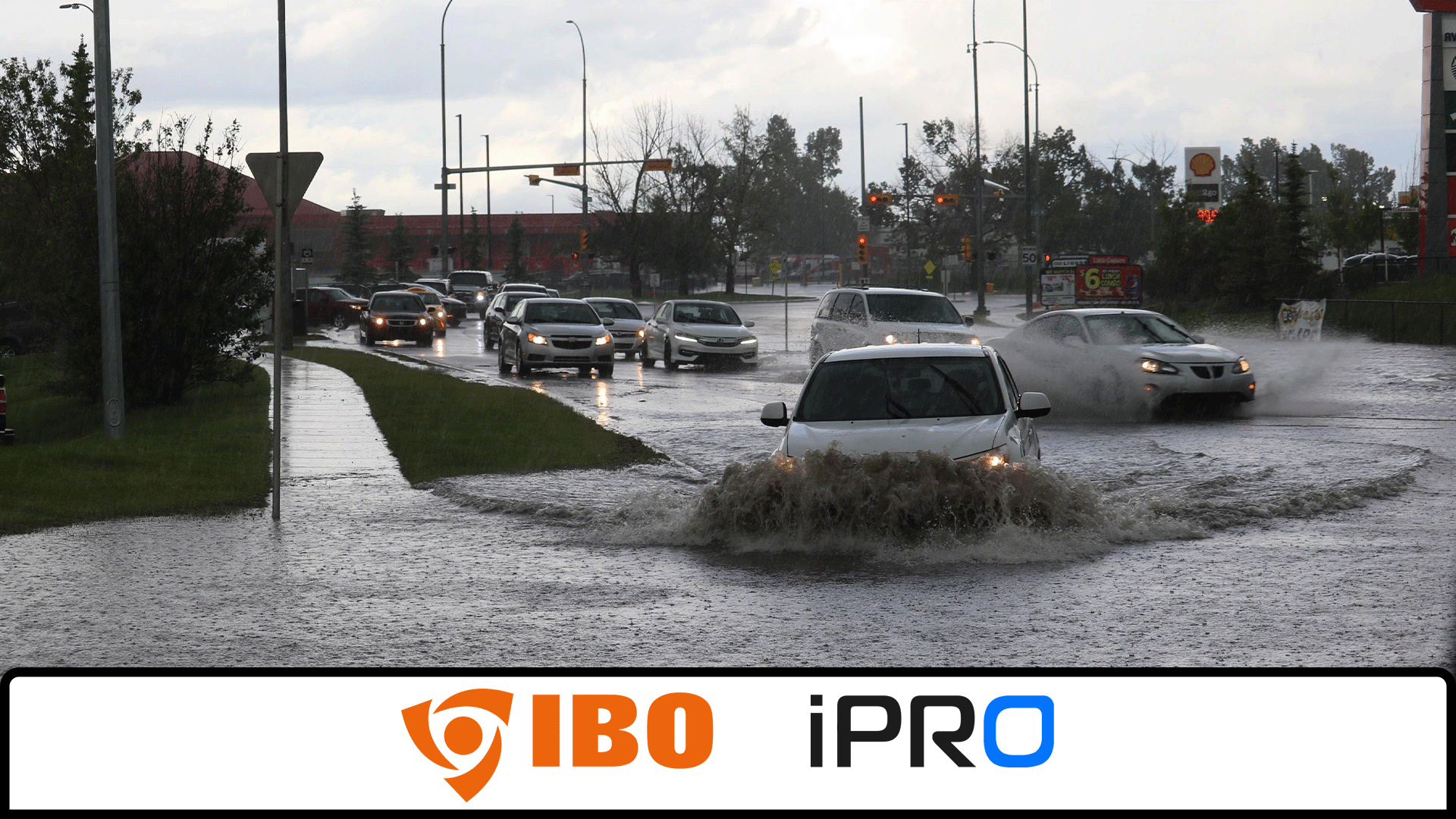
As a water pump manufacturer, at Dambat we've seen for years that when mobility and quick operation without access to the electrical grid matter, installers and technical teams turn to gasoline water pumps. The portability of water pumps and their independence from an electrical outlet mean this equipment continues to grow in popularity among installation companies. W this article, we explain how a gasoline-powered pump works, how standard dewatering pumps differ from high-pressure models, and offer advice on choosing the right water pump model for a specific task - from drying out an excavation and irrigating fields to supplying water during firefighting operations. We write this as members of Dambat's marketing department, drawing on the real technical specifications of our IBO brand water pumps.
How a gasoline water pump works - operating principle
The operating principle of a gasoline water pump is simple and has been proven over decades: a gasoline engine drives the impeller of a centrifugal pump, which draws water in through the suction hose and pumps it out through the discharge port. The entire assembly - engine, fuel tank, and pump - is mounted on a shared metal frame, allowing IBO water pumps to be easily moved and positioned exactly where work is underway.
Pumps of this type are self-priming. This means that before each start, the pump must be filled with water through the priming plug - only then can the impeller create the vacuum needed to draw water from a source below the pump. A suction strainer with a check valve is fitted to the end of the suction hose. It prevents water from draining out of the system when the engine stops and protects the pump from drawing in larger solid contaminants.
The key advantage of this solution is independence from the electrical supply. All it takes is fuel in the tank for the water pump to draw in water and start operating - no generator, extension cords, or access to an outlet needed. That's why gasoline water pumps are used where there's simply no electricity or bringing it in would take too long: at construction sites, in fields, in flood-affected areas, or during rescue operations.
It's worth noting that most models are started mechanically - a manual pull-start using a starter cord is standard, just like on typical lawn mowers or gasoline generators, so no specialized training is required to operate them.
Standard gasoline water pumps vs. high-pressure water pumps
We offer two product lines designed to meet the different needs of installers and professional users.
The standard petrol water pump from the BZP series is a drainage pump designed for high flow. The BZP-10, BZP-20, and BZP-30 models differ mainly in water-pumping capacity and port diameter. The robust BZP-20 petrol pump delivers a flow rate of 600 l/min at a delivery head of up to 30 m, while the larger BZP-30 pumps up to 1,000 l/min at the same delivery head. Both pumps have a suction depth of up to 7 m and can handle water at temperatures of up to 35°C, including water containing solid particles within the size limits specified for each model.
The second range consists of high-pressure petrol water pumps from the H-BZP series. As the name suggests, their design is optimized for pressure and delivery head, at the expense of some flow compared with the drainage series. The H-BZP high-pressure petrol water pump can pump water to a height of around 28 m at a flow rate of 133 l/min – here, pressure, not just the amount of water pumped, determines effectiveness. High-pressure pumps are therefore used in situations where water must travel a long vertical distance: supplying water for firefighting, irrigating land located above the water source, or pumping water from deep excavations to higher ground. You can find the H-BZP-20 and H-BZP-30 models in our range, with full technical documentation.
Choosing between these two product families really comes down to one question: is the priority high flow at a moderate delivery head (BZP series), or high pump pressure and vertical reach (H-BZP series)? The wide selection of petrol water pumps in both ranges makes it possible to match the device to actual working conditions, rather than buying a “universal” pump that won’t perform optimally in any application.
Practical applications of petrol water pumps
The performance of a petrol water pump makes it useful in many industries, and its greatest advantage is its versatility combined with portability.
- Construction applications – construction work often requires the rapid drainage of flooded excavations, foundations, or work sites. The pump’s sturdy design and metal frame allow it to be placed right next to an excavation so drainage can begin immediately, without waiting for a power connection.
- Agricultural applications – irrigating fields and gardens, pumping water from reservoirs or ponds, and draining flooded areas after heavy rainfall are everyday tasks for which a gasoline-powered water pump is particularly useful on farms far from the power grid or in areas where electricity simply is not available.
- Firefighting applications – their portable design and ability to start immediately make water pumps, especially high-pressure models, useful for fire and rescue services to deliver water over long distances and to elevated locations.
- Cleanup and grounds maintenance crews – where water containing solid debris needs to be pumped out quickly, for example after flooding, a pump with a high flow rate and resistance to mechanical contaminants comes in handy.
All these applications have one thing in common: pumping clean or slightly contaminated water. None of the BZP or H-BZP models is designed for pumping sewage or chemically aggressive liquids. When pumping clean water at high pressure, for example to irrigate orchards on slopes or hilly terrain, the H-BZP series is the best choice as a high-pressure pump for pumping water to elevated locations. When pumping clean water, a well-chosen pump should maintain a steady flow regardless of the distance between the water source and the destination.
Why choose IBO professional gasoline-powered water pumps
Choosing the right brand matters, because it determines how long your equipment will operate reliably in demanding outdoor conditions. We designed IBO professional gasoline-powered water pumps for installers and companies that cannot afford equipment downtime at a critical moment.
The four-stroke engine runs on Pb95 gasoline (the smallest model has a two-stroke engine) and uses SAE 10W-30 oil, ensuring stable operation and a long service life with regular maintenance. The engine’s high power, reaching 6.5 HP in the BZP-20 and BZP-30 models, ensures high water-pumping efficiency even under full load.
The reinforced frame and metal support structure are not just about appearance - above all, they ensure high build quality, protecting the engine and pump when transporting them in a pickup bed or on a trailer, or carrying them by hand between work sites. The cast iron impeller used in the pump’s construction increases wear resistance when working with water containing small solid contaminants, directly extending the service life of the entire pumping assembly.
Every IBO pump comes with a 24-month manufacturer’s warranty - the 24-month warranty is valid from the date of purchase, and warranty and post-warranty servicing is provided directly by Dambat. Each unit comes with a warranty card, which should be kept with the proof of purchase in case a service request is needed.
How to choose a pump model - key parameters
When choosing a pump model, it is worth considering several technical parameters that have a real impact on whether the equipment will perform well under specific working conditions:
- Water pumping capacity - expressed in l/min, it determines how quickly the pump will empty an excavation, tank, or flooded area. The larger the port diameter, the higher the capacity usually is.
- Head height - a key parameter when water needs to be pumped to a higher level than its source, for example into a tank or up a slope. Head height is what distinguishes the H-BZP series from standard BZP models.
- Suction depth - indicates the depth from which the pump can effectively draw water. W IBO models, it is up to 7 m, which covers most typical field applications.
- Engine power - directly affects pump performance and its ability to run continuously under load, for example with longer discharge hoses.
- Fuel tank capacity - determines how long the pump can run before it needs to be refueled - an important factor when draining takes many hours.
- Pump pressure - the higher the pump’s maximum pressure, the greater the horizontal and vertical reach of the water stream, which is especially important in firefighting applications.
It is also worth remembering that choosing the right hose diameter and suction line length affects the pump’s actual performance almost as much as the engine specifications themselves - a suction hose that is too long or too narrow causes losses that are difficult to distinguish from a fault in the pump itself.
Motor pump accessory set – a ready-to-use dewatering solution
For installers who want a complete solution right out of the box, we’ve prepared sets with accessories. The accessory set for BZP-20 and BZP-30 motor pumps includes a rigid-braided suction hose, a discharge hose, a suction strainer with a check valve, and a set of clamps and seals. Once fuel and oil have been added, the motor pump is ready to use without having to assemble the accessories yourself – a time-consuming task if you don’t have the right connectors and hoses in compatible diameters on hand.
Ready-made sets with hoses and accessories are available here: BZP-20 set with hoses and accessories and BZP-30 set with hoses and accessories. These sets are especially recommended for companies buying a motor pump for the first time and looking to avoid mistakes when choosing the accessories.
Operation and maintenance – how to extend your motor pump’s service life
The long service life of a petrol-powered motor pump depends largely on a few simple habits worth remembering when using the equipment every day:
- Check the engine oil level before every start – running with too little oil is the most common cause of premature engine wear.
- Always prime the pump with water before starting – its self-priming design won’t work properly when run “dry,” and prolonged operation without water can damage the seals and impeller.
- Make sure the suction strainer is fully submerged and the suction hose is airtight along its entire length – a leak here makes it difficult or impossible to draw water.
- After pumping contaminated water, it’s a good idea to flush the system with clean water to limit the buildup of contaminants inside the pump.
- The manual-start motor pump model requires periodic checks of the starter cord and mechanism, especially before the season of intensive use.
Technical documentation, including user manuals in Polish, English and German, is available in the downloadable manuals section on our website. W If you have any questions about choosing a model or submitting a service request, please contact our team – we’ll be happy to help you choose a motor pump for your specific application.
Browse the full range of gasoline-powered water pumps, including all available models and sets, in the gasoline-powered water pumps category. If you’re looking for a pump for agricultural applications powered by a tractor’s PTO shaft, check out our range of tractor pumps too. Our pipe diameter calculator can help you choose the right hose and pipe diameters, and you’ll find the full IBO catalog in the IBO product collection.
Frequently asked questions (FAQ)
What is the difference between a standard gasoline-powered water pump and a high-pressure model?
The standard BZP series gasoline-powered water pump is optimized for high flow rates, making it suitable for quickly draining excavations and tanks. The high-pressure H-BZP series water pumps achieve a much greater pumping height at a lower flow rate, allowing them to deliver water over long distances and to greater heights, for example, for firefighting or irrigating elevated terrain.
What types of water can IBO water pumps handle?
The BZP and H-BZP models are designed for clean water and water containing solid particles, provided they are within the size limits specified in the technical specifications for each model. The maximum liquid temperature is 35°C. These pumps are not designed for sewage containing fecal matter or chemically aggressive liquids.
How do you properly prepare a water pump for use?
Before starting the pump, fill it with water through the priming plug and check the engine oil level. The suction strainer must be fully submerged, and the suction hose must be airtight along its entire length. Otherwise, the pump will not draw water properly.
Are IBO water pumps available in ready-to-use sets with accessories?
Yes, the BZP-20 and BZP-30 models are also available in sets that include a suction hose, a discharge hose, and a suction strainer with a check valve. These water pump accessory sets let you get started as soon as you have filled the pump with fuel and oil.
What warranty do IBO water pumps come with?
Every IBO gasoline-powered water pump comes with a 24-month manufacturer’s warranty. Warranty and post-warranty service is provided by Dambat. A warranty card is included with the device and should be kept with your proof of purchase.
Where can you buy IBO gasoline-powered water pumps?
As a manufacturer, we do not sell directly. IBO gasoline-powered water pumps can be purchased from our retail partners, plumbing wholesalers, and authorized online distributors.