Inverter Pumps and Ready-Made Water Pressure-Boosting Systems
Pressure fluctuations are one of the most common problems in domestic water systems. All it takes is for someone to take a shower while the dishwasher starts running in the kitchen, and the flow at one of the outlets noticeably weakens. In systems controlled by a conventional pressure switch, this is a natural consequence: the pump switches on and off abruptly, while the pressure constantly fluctuates between two thresholds. However, this can be stabilized—and that is precisely what an inverter is for: a frequency converter that smoothly adjusts the motor’s operation to the amount of water being drawn at a given moment.
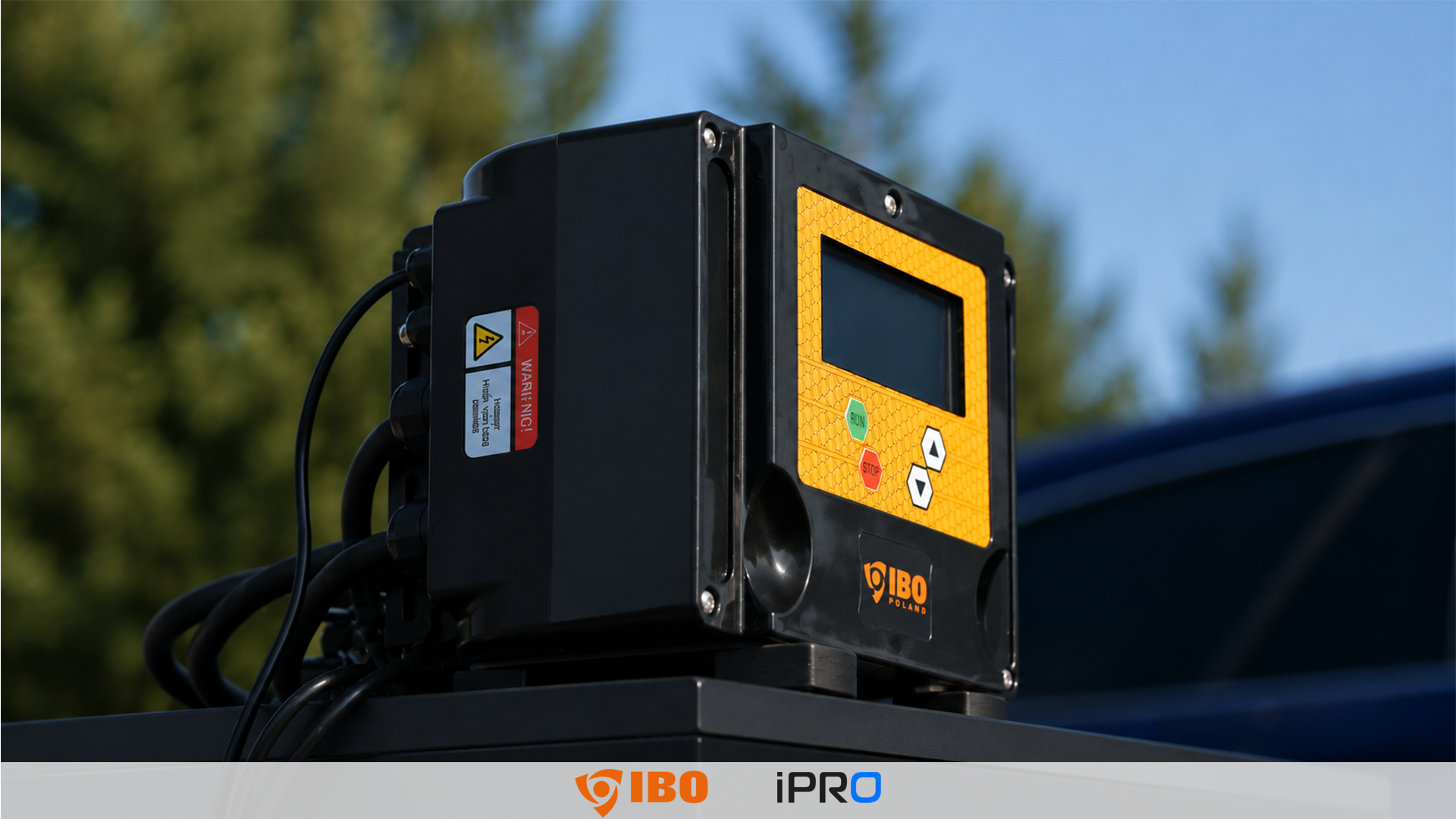
In our IBO and IPRO range, the inverter is often not a separate accessory but part of a ready-made solution—an intelligent pump with built-in control or a complete pressure-boosting system. In this article, we explain how an inverter works, what it actually provides in terms of constant water pressure, and how to choose between an individual pump and a ready-made system.
How Does an Inverter Work in a Pump—and How Does It Differ from a Pressure Switch?
An inverter—also known as a frequency converter or variable-frequency drive—changes the frequency of the voltage supplied to the motor. Since the motor’s rotational speed is related to frequency, the device smoothly regulates the speed and, consequently, the flow rate and head. The pump therefore does not operate in an “on or off” mode but maintains precisely the speed required by the current demand.
This is where it differs from a pressure switch. A pressure switch starts the pump at the lower threshold (e.g. 2.5 bar) and switches it off at the upper threshold (e.g. 3.5 bar), causing the pressure to fluctuate constantly within this range. An inverter reads the current pressure from a sensor and automatically adjusts the speed to maintain one set value—regardless of whether one outlet or several are open. This provides noticeably greater comfort and more stable pump operating parameters.
Constant Water Pressure—What Do You Really Gain?
The most important benefit is noticeable in everyday use: constant water pressure throughout the system. Maintaining constant pressure means that the shower does not lose power when someone turns on a tap in another room, and the garden irrigation system operates with the same flow in the morning and evening. Instead of fluctuations, you get stable water pressure set once according to your needs.
In systems with longer pipelines or several outlets operating simultaneously, this also has a technical benefit. Smooth pressure boosting eliminates the water hammer associated with abrupt pressure-switch starts, reducing the load on fittings, valves, and the pump itself. Fewer sudden changes directly translate into quieter and longer-lasting operation.
Inverter vs. Pressure Tank System—Is a Large Tank Still Needed?
A pressure tank system and an intelligent inverter pump are two different—although both automatic—ways of maintaining pressure. In a pressure tank system, operation is controlled by a pressure switch: the pump starts when the pressure falls to the lower threshold and switches off after reaching the upper threshold, while the diaphragm tank stores a reserve of water between cycles. The solution is simple and reliable, but the pressure naturally fluctuates within the pressure-switch settings.
An inverter pump works differently: instead of switching on and off, it smoothly regulates the motor speed to maintain one set pressure continuously—without storing water in a large tank, because the electronics take over the regulator’s role. The difference therefore comes down to the result: the inverter provides more stable pressure and smaller dimensions, while the pressure tank system offers proven simplicity and a reserve of water in the tank.
Energy Savings and Pump Protection
An inverter also provides real energy savings. Dynamically varying motor speed, depending on water demand, can significantly reduce electricity consumption. Energy-efficient inverter pumps reach full capacity only when needed—when, for example, just one outlet is open, the pump operates at lower power.
Another advantage of an inverter is equipment protection. Soft start limits starting currents and mechanical loads during startup, and most of our inverter systems feature built-in dry-run and overload protection. Fewer abrupt starts and the elimination of dry running extend the trouble-free service life of the submersible pump.
Where Does an Inverter Work Best—Applications and Selection
An inverter is most useful wherever water consumption varies and constant or higher pressure is particularly important:
- Single-family homes with gardens—greater comfort and an efficient irrigation system without pressure drops.
- Farms and crop irrigation—stable operation with varying demand from multiple outlets operating simultaneously.
- Systems with long pipelines—where pumping performance and maintaining pressure at the end of the line are important.
- Facilities operating continuously—here we use professional submersible pumps from the IPRO range and higher-durability equipment.
The inverter itself is selected primarily according to the motor’s power and power supply (230 V and 400 V versions), while the system’s duty point is selected according to the source’s maximum capacity and the required pressure. That is why it is always worth starting with the parameters: well depth, dynamic water level, and actual demand, which you can estimate using our water demand calculator. IBO pump models with inverters and compatible accessories can be found in our catalogue on the website. If you have any doubts when selecting a device, we encourage you to contact our technical department.
Dambat—a trusted manufacturer of pumps and water engineering equipment with quality certificates.
Frequently Asked Questions (FAQ)—Inverter Submersible Pump
Where can I buy an IBO or IPRO submersible pump with an inverter?
As a manufacturer, we do not sell directly to end customers. IBO and IPRO submersible pumps and inverters are available from our authorized commercial partners, plumbing wholesalers, and online distributors in Poland. We describe the details in the article how to order IBO and IPRO pumps.
Can I purchase an inverter separately for a pump I already own?
Yes, an inverter can be added to an existing system, provided it is matched to the motor’s power and supply voltage (230 V or 400 V) and to the pump’s characteristics. If you have any doubts, our technical department can help verify whether the system will operate correctly. See the range of inverters on our website.
What is the difference between an inverter and a pressure switch?
A pressure switch turns the pump on and off between two pressure thresholds, causing the pressure to fluctuate constantly. An inverter smoothly regulates the motor speed based on the sensor reading, maintaining one set, constant water pressure regardless of the number of open outlets.
Does an inverter protect the pump against dry running?
The inverter itself does not, but most of our inverter systems have built-in dry-run and overload protection. The inverter provides a soft start that limits starting currents and mechanical loads, resulting in a longer service life for the submersible pump.
Does an inverter provide real energy savings?
Yes. According to the affinity laws for pumps, power consumption decreases approximately with the cube of the rotational speed, so operating at lower speed with lower demand significantly reduces energy consumption. Energy-efficient inverter pumps avoid unnecessarily reaching full capacity when it is not required.