Building and modernizing a domestic water system is a process that requires careful selection of equipment, accessories, and technology. From an efficient submersible pump, through the right well filter, to water treatment plants for single-family homes—every element is crucial to the quality, pressure, and reliability of the supplied water. As a manufacturer of pumps and accessories under the IBO and IPRO brands, Dambat provides comprehensive solutions for building modern water systems in single-family homes as well as garden and industrial systems.
Pumps—the heart of every water system
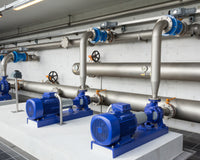
The pump is one of the most important components of a water system. It is responsible for pumping water from the source into the installation and maintaining the appropriate pressure. Depending on the water source and application, several types of equipment can be distinguished. A ring-well pump is used in traditional dug wells where the water table is at a shallow depth. These devices must be resistant to fine contaminants and characterized by high reliability.
A rainwater tank pump, on the other hand, is invaluable in rainwater recovery systems. It enables the automatic pumping of collected water into a garden installation, and when combined with an underground rainwater tank with a pump, it provides an ecological and economical source of water for watering or washing. IBC container pumps are also popular, as they enable the use of water stored in IBC containers for irrigation or technical purposes—they are ideal for gardening and small installations.
For deeper water sources, submersible pumps are used to pump water from considerable depths. For the system to operate correctly, the entire pressure system must also be planned, including the connection diagram for a pressure tank with a submersible pump. This arrangement ensures stable pressure in the installation, water storage, and protection of the pump against excessively frequent activation.
Filters and iron-removal systems—the key to clean and safe water
The quality of water drawn from a well or the water supply network can vary significantly, which is why proper treatment is so important. The basic components of the system are string-wound filters, which retain sand, suspended solids, and mechanical particles. These are mechanical filters that protect subsequent components of the installation from contamination and extend their service life. In the case of well water, a well filter is also extremely important—installed at the inlet, it protects the pump and installation from fine contaminants entering from the water source.
The next step in water treatment is a water iron-removal system, which removes excess iron and manganese, improving the taste, smell, and color of the water. This process is especially necessary in homes using their own wells, where the concentration of these elements often exceeds permissible standards. A properly selected iron-removal system protects fittings, household appliances, and heating installations from the accumulation of deposits.
The most comprehensive solution is water treatment plants for single-family homes, which combine several filtration stages—mechanical, chemical, and biological. Depending on water quality and user requirements, they can remove not only iron and manganese, but also ammonium compounds, hydrogen sulfide, water hardness, and microorganisms. These plants can easily be integrated with other system components, such as storage tanks, pumps, or pressure systems.
Rainwater tanks—an ecological source of water
More and more investors are choosing to use rainwater, which not only reduces bills but also relieves water supply and sewage networks. An underground rainwater tank with a pump makes it possible to store rainwater and automatically supply irrigation systems, garden installations, and even toilet cisterns. With the right pump, water can be delivered at high capacity and the appropriate pressure, allowing it to be used at multiple outlets.
A rainwater collection and utilization system can be combined with mechanical filtration, preventing leaves, sand, and other contaminants from entering the system. Combined with IBO pumps and IPRO automation, this creates a modern, efficient, and maintenance-free system that significantly increases a building’s self-sufficiency and reduces drinking water consumption.
How to plan a complete water system—practical tips
When designing a water installation for a home or garden, it is worth paying attention to several key technical aspects:
- Choose a pump suited to the type of water source—a ring-well pump is suitable for shallow sources, while deeper wells require a submersible pump. For storage tanks, a rainwater tank pump or IBC container pump will be ideal, selected according to the tank capacity and delivery head.
- Ensure effective filtration—string-wound filters and well filters protect the installation from contaminants, while a water iron-removal system removes iron and manganese compounds. Comprehensive water treatment plants for single-family homes improve water quality to drinking-water standards.
- Include pressure and storage systems—the connection diagram for a pressure tank with a submersible pump should include the appropriate selection of the pressure tank, pressure switch, and valves, ensuring stable pressure and protecting the pump.
- Use automation and safety features—pressure controllers, water-level sensors, and safety valves increase the reliability and service life of the entire system while also enabling unattended operation.
- Use rainwater—an underground rainwater tank with a pump enables the efficient use of free water for watering, washing, or flushing, reducing household operating costs.
Each of these elements affects the operation of the entire system, so it is best to plan the installation comprehensively—from the water source, through filtration and storage, to distribution. Proper selection of equipment and components guarantees stable operation, high water quality, and a long service life for the entire installation.
FAQ—frequently asked questions about pumps, filters, and water treatment
How does a water iron-removal system work, and when is it needed?
A water iron-removal system removes excess iron and manganese from water through aeration and filtration. It is essential for water from private sources, where the concentration of these elements often exceeds permissible standards. Its use improves the taste and smell of the water, protects the installation against deposits and corrosion, and extends the service life of equipment. Regular maintenance and backwashing of the filter bed are crucial for maintaining high performance. Thanks to modern control systems, these devices operate automatically and do not require daily attention.
What is the difference between a ring-well pump and a submersible pump?
A ring-well pump is designed for shallow water sources, where the water table is usually up to 8 meters below ground level. It has greater tolerance for fine contaminants and a simpler design. A submersible pump, in contrast, is designed to operate submerged in deeper aquifers, pumping water from greater depths. It requires more precise matching to the well diameter, depth, and source capacity. Selecting a pump appropriate to the operating conditions directly affects the performance and durability of the entire system.
How does a string-wound filter work, and where should it be installed?
String-wound filters are mechanical filters made of wound material that retains suspended solids, sand, and other solid particles. They are installed at the inlet of the water system, before devices such as treatment plants, iron-removal systems, or water heaters. Their primary role is to protect fittings and equipment from mechanical contaminants that can shorten their service life. These filters are inexpensive, easy to replace, and available in various filtration grades, allowing them to be matched to the water quality. Regular replacement of the cartridges ensures their effectiveness and the long service life of the entire installation.
What does the connection diagram for a pressure tank with a submersible pump consist of?
The connection diagram for a pressure tank with a submersible pump includes several key components: a submersible pump that pumps water from the well, a pipeline with a check valve, a pressure tank, a pressure switch, and a pressure gauge. The entire system operates automatically—when the pressure in the tank drops, the pressure switch starts the pump, and when the set level is reached, it switches it off. This keeps the installation pressure stable, protects the pump from excessively frequent activation, and ensures a constant supply of water. Correct implementation of the diagram is crucial to the safety and durability of the entire system.
Is it worth investing in an underground rainwater tank with a pump?
An underground rainwater tank with a pump makes it possible to efficiently collect and use rainwater in a household. With a pump, water can easily be supplied to an irrigation system, toilet-flushing system, or used for cleaning purposes. This solution reduces drinking water costs and increases a building’s independence from the water supply network. In addition, storing rainwater benefits the environment by reducing runoff into the sewage system. The system can be integrated with filtration and automation, making it virtually maintenance-free and highly durable.
Are other types of filters available besides string-wound filters?
Yes—in addition to the classic string-wound filter, water treatment systems also offer other types of cartridges, such as a carbon filter (carbon block), ceramic filter, mesh filter, and foam filter. A carbon filter removes chlorine compounds from water and improves its taste and smell, significantly enhancing the quality of utility water. A ceramic filter is characterized by very high filtration accuracy, retaining the smallest particles and often serving as the final purification stage. A mesh filter is a reusable cartridge that effectively protects the installation from sand, suspended solids, and larger mechanical contaminants, while a foam filter is highly effective at removing larger particles such as rust and soil particles. In practice, several types of filters are often used simultaneously to achieve comprehensive and effective water purification at different filtration stages.
Summary
Building a complete water system in a single-family home or household requires careful selection of equipment and ensuring that the components work together. Pumps, filters, iron-removal systems, and water treatment plants perform different but equally important roles in providing clean, safe water at the appropriate pressure. Thanks to modern technological solutions, it is possible to create a system that operates reliably for many years while requiring minimal maintenance. Integrating all components—from the source, through filtration and storage, to distribution—makes it possible to fully utilize the installation’s potential and ensure high performance.
By choosing Dambat equipment, including IBO pumps and IPRO automation, you are investing in proven technologies that can be adapted to any installation, whether new or modernized. The comprehensive range includes pumps for wells, rainwater, and containers; filters; iron-removal systems; water treatment plants; and accessories for pressure systems. This allows you to build a water system tailored to your needs and local conditions, providing comfort, independence, and long-lasting reliability.