A drop under the handle, a wet patch on the boiler room floor, or water running from the tap even though the valve is turned off. A ball valve is the simplest fitting in a plumbing system, yet it can derail plans to replace a pump or filter because when it’s supposed to shut off the water, it turns out it won’t hold.
A ball valve leaks at the handle when the stem seal has worn out: if there is a packing nut under the handle, carefully tightening it is usually enough; if the stem is sealed by O-rings alone, the valve must be disassembled or replaced. A ball valve usually fails to shut off the water because the handle turns on the stem, sediment has settled on the ball, or the seats are scratched from operating in a partially closed position.
With this guide, we’ll show you how to identify the cause, what you can repair yourself, and when the valve needs to be replaced.
Table of contents
- Why is the ball valve leaking at the handle?
- Why isn’t the ball valve shutting off the water?
- Where is the ball valve leaking? Leak locations
- Repair or replace the ball valve?
- Ball valves at the circulation pump
- How can you prevent ball valve failures?
- Frequently asked questions
Why is the ball valve leaking at the handle?
A ball valve leaks at the handle because the stem seal has worn out. The repair method depends on the design: whether the stem is sealed by a packing nut, that is, a separate nut under the handle, or only by O-rings concealed in the body.
It takes a minute to identify. Remove the handle and check whether there is a second nut on the stem underneath it. If there is, it’s the packing nut, and tightening it usually stops the leak. If the nut or screw under the handle only holds the handle in place, tightening it won’t help, and too much force could damage the stem.
How do you safely tighten a ball valve packing nut?
Tighten the packing nut as follows:
- Remove the handle.
- Hold the valve body with a second wrench to avoid twisting the pipe.
- Tighten the packing nut slightly.
- Check whether the leak has stopped and whether the valve still turns by hand through its full range.
- When necessary, repeat, always in small increments.
Overtightening increases resistance in the stem, and if the valve fails, you may not be able to close it by hand. Makeshift fixes found in home plumbing, such as a rubber plug with a hose clamp or extra washers, can jam the valve just when you need it.
Work on a cooled-down central heating system, and don’t unscrew the packing nut while the system is pressurized: first isolate the section and release the pressure.
Why isn’t the ball valve shutting off the water?
A ball valve usually fails to shut off the water because the handle turns on the stem, the valve is not fully closed, sediment has settled on the ball, or the seats are scratched from operating in a partially closed position.
To understand these faults, you just need to know how a ball valve works. W inside is a ball with a hole: turning the handle a quarter turn positions the hole either in line with or across the pipe, while seats pressed against the ball provide a tight seal. A ball valve is for shutoff, not flow control. A globe valve with a handwheel is designed for flow control, and using a ball valve in a partially open position creates turbulence and wears out the seats faster.
| Cause | How to identify it | What to do |
|---|---|---|
| The handle spins on the stem | The handle turns, resistance does not increase, and water continues to flow | Remove the handle and turn the stem with an open-end wrench, gripping the flats |
| Valve not fully closed | The handle is not perpendicular to the pipe | Close it fully |
| Debris on the ball and seats | The valve is hard to close and leaks despite being fully closed | Close and open it several times; if that does not help, replace it |
| Scratched seats | Leaks despite being fully closed, often after years of operation in a partially closed position | Replace the valve |
Seized ball valve: how to move it without twisting off the stem
A seized ball valve that has not been used for years is a separate case. Move it gradually in both directions, counterholding the body with a second wrench. Do not extend the handle with a pipe: if the valve will not move with reasonable force, it is better to plan a replacement after shutting off the water upstream than risk twisting off the stem while the system is pressurized.
How to check whether a closed ball valve is holding
You can check whether the closed valve is holding without removing it:
- Close the valve fully.
- Open the nearest outlet or drain downstream of the valve.
- Wait for the pressure to drop and the water to drain from the section.
- If water is still flowing in a steady stream after a few minutes, the valve is not holding.
W a central heating system, perform the test when the system has cooled down. Since it is a closed loop, water will also flow to the drain from the other side, so close the valves on both sides of the section, for example around the pump, and open the drain between them. After draining the section, you need to restore the pressure, as we explain in our article about pressure drops and low water levels in a central heating system
Where is the ball valve leaking? Leak locations
When a ball valve leaks, water can emerge from four places: the stem under the handle, the threaded connection or union, a cracked body, or “inside,” meaning it lets water through when closed. Before tightening anything, wipe the valve dry and watch where the drop actually appears, because water runs down the body and can make the leak seem to come from somewhere else.
| Location | Symptom | Most common cause | What to do |
|---|---|---|---|
| Stem beneath the handle | Drips when the handle is moved or continuously | Worn gland or O-rings | Check for a gland and tighten it |
| Threaded connection | Moisture on the thread, deposits where it meets the pipe | Thread sealing done incorrectly | Disconnect and reseal |
| Union | Dripping from the union nut | Worn gasket | Replace the gasket or tighten the nut |
| Body | Scratch, corrosion, seepage | Crack or casting defect | Replace the valve only |
| Inside the valve | Water flows even when closed | Scratched ball, seats, deposits | Test whether it shuts off; usually replace it |
Repair or replace the ball valve?
A ball valve is worth repairing if it leaks at the gland, thread, or union. A cracked body, leakage when closed, a broken stem, or a leaking valve without a gland means it must be replaced.
| Fault | Is repair worthwhile? | What to do |
|---|---|---|
| Leak at the stem, gland present | Yes | Carefully tighten the gland |
| Leak at the stem, no gland | Rarely | Replace it with a valve with a gland |
| Leak at the thread or union | Yes | Reseal or replace the gasket |
| Cracked or corroded body | No | Replace it immediately |
| Does not shut off (ball, seats) | Practically never | Replace the valve |
| The handle spins on the stem | Yes, if the stem turns | Replace the handle; replace the valve if the stem is seized |
How to choose a new ball valve
When choosing a new valve, pay attention to the type of connections (female or male thread, union version), whether it is straight or angled, and whether the handle fits the installation space. A union valve makes future maintenance easier, because it can be replaced without dismantling the entire connection. The thread must be carefully sealed during installation; we explain the method in our article on sealing threaded connections with hemp and oakum.
The main valve upstream of the water meter is a separate matter: it often belongs to the water utility and may be sealed, so its replacement should be arranged with the water utility or building manager.
Ball valves at the circulation pump
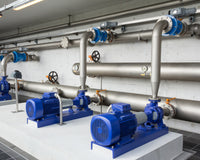
Ball valves on both sides of the circulation pump must be leak-tight when closed and fully open during operation. Leak-tight valves let you replace the pump without draining the entire system, and if one does not seal, water will keep flowing out during removal.
A partially closed valve by the pump restricts flow and causes symptoms similar to those of a weak pump: noise, cool radiators and low flow. Before blaming the pump, check the position of the valves. Other causes are described in our article on symptoms of incorrect circulator pump operation. Check that both valves are leak-tight before planning to replace your energy-efficient central heating circulator pump, not just during the replacement.
How can you prevent ball valve failures?
A few simple habits can prevent ball valve failures:
- Perform a full cycle every few months: close and open the valve to prevent the ball and seats from seizing.
- Use the valve only in the open or closed position.
- W at service points, near the pump, filter and tank, use valves with a gland and union.
- When servicing, always use a second wrench to hold the valve body.
- Limit deposits in the system, as magnetite and sludge damage the ball seats. Magnetic filters that protect the valve and pump from deposits can help.
Frequently asked questions
Can a leaking ball valve be tightened?
Yes, but only if there is a gland nut under the handle. W a valve sealed only with O-rings, tightening will not help, and the valve must be disassembled or replaced.
Can a ball valve that does not shut off the water completely be repaired?
Usually not: a scratched ball, damaged seats or deposits mean the valve needs replacing. An exception is a handle that turns on the stem, since the stem itself can be turned with an open-end wrench.
Is it worth repairing a ball valve?
Yes, if there is a leak at the gland, thread or union. If the body is cracked or the valve leaks when closed, replace it.
Can a ball valve be used to regulate flow?
No, it is a shut-off valve. Operating it partially open accelerates seat wear and leads to leaks.
How often should you operate a ball valve to prevent it from seizing?
One full cycle every few months is enough: close and open the valve. This prevents the ball and seats from seizing, so the valve will work when needed.
Dambat - a trusted manufacturer of pumps and hydrotechnical equipment with quality certifications.