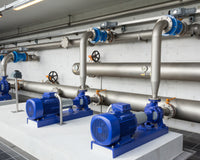
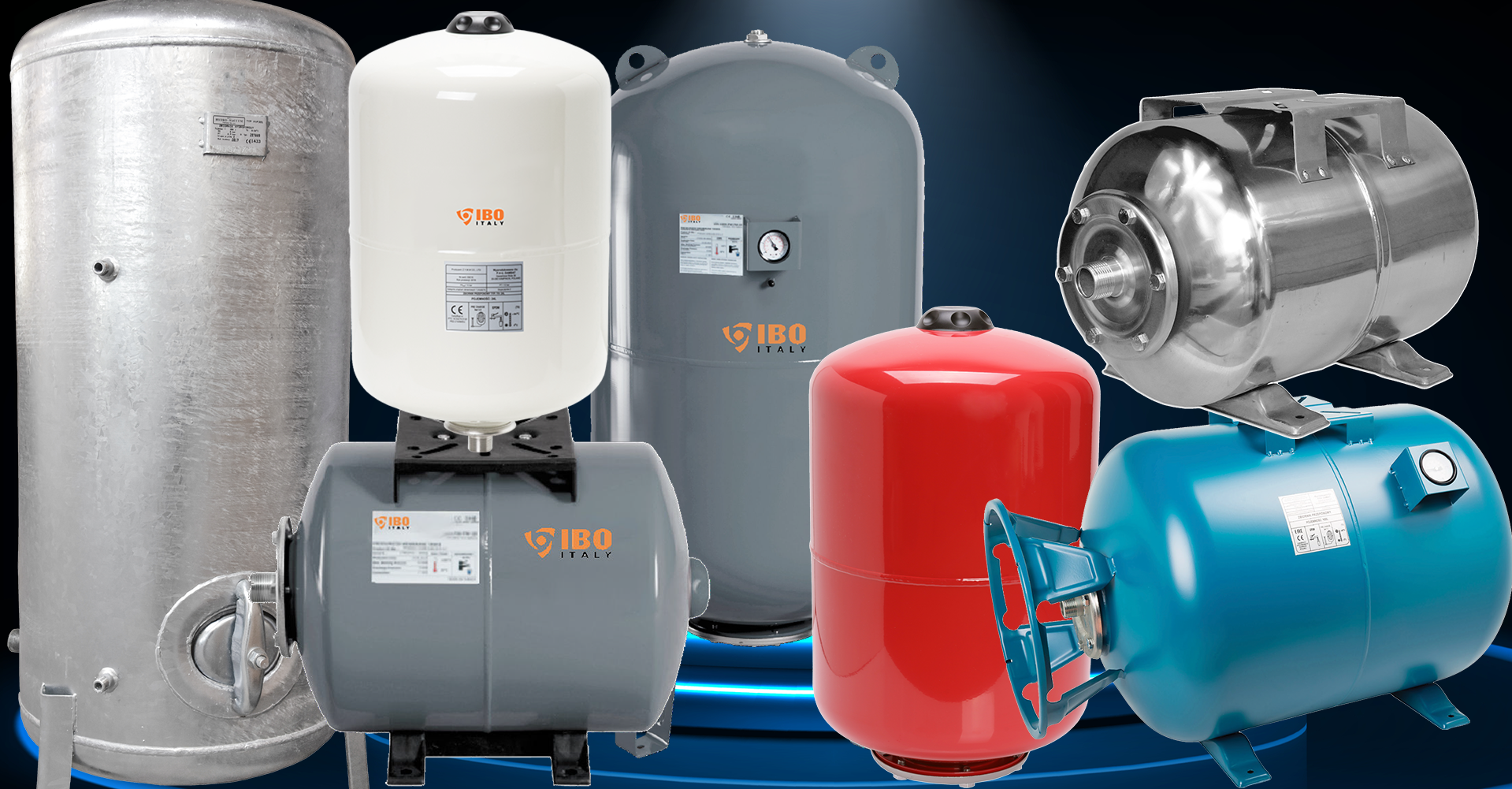
Diaphragm tanks are membrane expansion vessels that protect water supply systems against sudden pressure increases. They are used in closed heating, solar, and refrigeration systems, ensuring their proper operation. Pressure diaphragm vessels are also used in systems designed to increase the pressure of the medium and supply domestic water. The vessel absorbs excess water pressure when necessary.
Diaphragm tanks. Characteristics and construction
Diaphragm tanks are cylindrical metal vessels manufactured from standard steel or stainless steel with increased corrosion resistance. Inside, they contain a diaphragm made of heat-resistant EPDM rubber (ethylene propylene rubber), which can be used across a wide temperature range, from -40°C to as much as +120°C. EPDM rubber is resistant not only to high temperatures but also to water vapor, ozone, and atmospheric conditions. SBR rubber is an alternative. The diaphragm has a membrane structure with a bladder-type design and separates the liquid medium from the gas filling the tank. The water chamber is connected to the system via a connection. A valve is located on the outside of the diaphragm tank, allowing the gas to be filled or released and thus equalizing the pressure. Diaphragm tanks are available on the market in various capacities, from 24 liters to as much as 300 liters.
Diaphragm tanks. Applications and operating principle
Diaphragm tanks stabilize pressure in water supply systems and compensate for the thermal expansion of water. During temperature changes, the pressure of the liquid changes, and its volume changes accordingly. Diaphragm tanks protect the liquid against uncontrolled pressure increases and thus compensate for differences in the liquid’s volume. When the liquid’s volume increases, the compressed gas is forced upward by the deformed membrane, and the liquid takes its place. In this way, the diaphragm tank absorbs excess liquid and equalizes the pressure. When the temperature drops, the retained liquid is pushed back into the system, and the gas expands. Excess water from the system is taken up by automatic mechanisms. The purpose of diaphragm tanks is to protect systems against failures and damage resulting from uncontrolled temperature increases. They keep system parameters within specified limits, primarily maintaining pressure at an acceptable level. They also increase the active volume of the water supply system and dampen hydraulic shocks. Using diaphragm tanks significantly extends pump service life.
Diaphragm tanks most commonly work with central heating systems and heat pumps in the heating systems of residential buildings. A diaphragm tank is also an integral component of booster sets, whose purpose is to maintain constant water pressure. In solar systems, a diaphragm tank can additionally be used to store the working fluid. Diaphragm tanks can be used not only to stabilize pressure but also to deaerate the system or compensate for water losses.