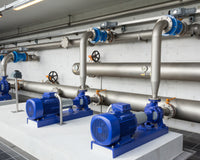
A circulation pump is a device used to circulate liquid in central heating systems, as well as in other heating and air-conditioning systems. This ensures the efficiency and proper operation of the entire system. Many newer boiler models are designed to work with circulation pumps, and increasingly, some come factory-equipped with them.
In this article, we will describe the most important functions performed by circulation pumps and explain which parameters to consider when selecting one.
What is a circulation pump responsible for?
The operation of pumps is based on the fundamental principle of converting mechanical energy into kinetic energy or potential energy of the liquid in the circuit. The pump—or, more precisely, its impeller—transfers its energy to the liquid, thereby setting it in motion. This allows water in the heating system to reach the most distant radiator.
Circulation pumps are most often installed where gravity heating cannot be used. Gravity heating relies on changes in water density caused by its temperature. Such systems have many limitations; moreover, they heat radiators slowly and may contribute to high energy consumption. Circulation pumps are a much more efficient alternative.
Choosing a circulation pump: which parameters should you consider?
For circulation pumps, the key parameters are flow rate (i.e., capacity) and head. Head is the pressure that the pump must impart to the liquid being pumped through the circuit. This value is given in metres of water column, and the recommendations for this parameter may vary depending on the characteristics of the system and the diameter of the pipes.
Sometimes it is difficult to select a pump with the right parameters, especially for small central heating systems. However, for systems in single-family homes, the circulation pump parameters are very often specified in the plumbing design. In addition, manufacturers' websites often provide customers with tools for calculating the required flow rate and pump head.