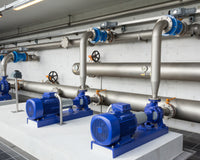

Before starting irrigation systems in spring, it is worth going through all the components step by step – from the water source and pump, through filtration and fittings, to sprinklers and drip lines – to ensure trouble-free garden irrigation throughout the season, including automatic operation.
Assessment of the water source, quality, and available capacity
The first step before commissioning is to define what will supply the irrigation system and what flow rate can be achieved at stable pressure – this applies to wells, the water supply network, and rainwater tanks alike.
- Check the water sources – a drilled well, dug well, water mains, open tank, Rainwater Tank, or larger storage reservoir.
- Assess the current water-table level and possible seasonal fluctuations – prepare for a drop in source capacity during the peak lawn irrigation season.
- Measure the approximate amount of water available: perform a flow test at an open outlet for 30–60 minutes and convert the result to l/min to properly plan the irrigation system.
- Assess the basic water parameters (sand, mechanical impurities, and any iron) – this is crucial for selecting filtration, protecting IBO / IPRO pumps, and limiting water loss in the installation.
If, as a property owner, you plan intensive garden irrigation supplied by Rainwater, it is essential to select the appropriate storage capacity and rainwater pumps from the IBO range so that water delivery remains stable even when multiple zones operate simultaneously.
More information about rainwater pumps and IBO garden pumps can be found on the manufacturer's website: IBO rainwater and garden pumps.
Pump selection and verification – submersible pump, garden pump, pressure booster
Before starting the season, it is essential to check whether the submersible pump, garden pump, or pressure booster set used has parameters that meet the design flow and pressure requirements for the selected watering system.
- Submersible pump IBO / IPRO – used for deep water sources with high performance requirements, ideal for extensive lawn irrigation systems and long-range sprinkler zones.
- Garden pump – a good choice for shallow water sources or operation with a Rainwater Tank, where mobility or periodic garden irrigation is required.
- A pressure tank or automatic control unit – for installations requiring stable pressure throughout the system operation, such as extensive sprinkler zones or drip lines at different levels.
It is worth checking:
- The pump’s head and flow rate must meet the demand required by the irrigation system for the most heavily loaded zone, taking into account pressure losses in the pipeline, fittings, and filters.
- The electrical condition—cables, plugs, connectors, and overload protection—and the tightness of the connection fittings and bypasses are the foundation of safe irrigation system power supply.
- Visual inspection of the housing, seals, and any leaks.
Examples of IPRO deep-well pumps for powering a professional irrigation system can be found here: Dambat IBO / IPRO deep-well pumps.
Filtration and water quality protection
For intensive lawn and planting irrigation, regardless of the type of irrigation used, it is essential to select filtration suited to the water source, both for pump service life and for the reliability of sprinkler nozzles and drip lines.
- Mesh filter – a basic component included in most irrigation systems; it protects sprinklers and drip irrigation systems from mechanical contaminants such as sand and solid particles.
- Carbon filter – used less frequently, mainly where better water quality is required, such as for sensitive crops or installations combining garden irrigation with domestic water supply.
- Regular inspection of filter cartridges, flushing, cleaning, and recording replacement dates in the documentation ensure that the operating irrigation system does not lose flow.
Remember that filtration that is too fine for the flow rate can increase water losses through the filters and reduce the efficiency of the irrigation system if it is not appropriately oversized.
Detailed instructions and installation recommendations for IBO controllers and pump accessories are available in the instructions section: instructions for IBO pumps and accessories.
Inspection of fittings, PE pipelines, and connectors
Before the season, conduct a comprehensive inspection of the fittings, manifolds, zone valves, and supply pipelines to ensure that the complete irrigation system is leak-tight and ready to operate at maximum load.
- Inspect all PE lines and PE connectors – check the tightness of the connections and any mechanical damage to cables, pipes, and couplings, especially after winter.
- Check the shut-off and regulating fittings, section valves, air vents, and check valves – properly functioning system components are essential for uniform flow distribution.
- Perform a trial filling of the installation with water and conduct a short system operation test at low pressure to locate any leaks.
From the installer's point of view, it is also a good time to adjust the section configuration if, in the previous season, garden irrigation did not adequately cover all zones or there were problems with watering uniformity.
You can find the current range of fittings and accessories for IBO pumps on the manufacturer's website: Dambat – Polish manufacturer of IBO and IPRO pumps.
Sprinklers, drip lines, and selecting the type of irrigation
A key stage in preparing the installation is verifying whether the selected type of irrigation actually matches the current plantings, soil, and garden size, and whether the irrigation system must be adapted to new areas or a lawn redesign.
- Static sprinklers – most commonly used for smaller ranges, regular layouts, and typical lawn watering; they require precise checking of angles, ranges, and nozzles before the season.
- Rotary sprinklers – ideal for larger areas and extensive sprinkler systems, they require stable pressure provided by a properly selected IBO / IPRO pump.
- Drip installation and drip irrigation installation – recommended where soil irrigation needs to be precise and the garden watering system must minimize losses and improve water uptake by plant roots.
Modern lawn irrigation systems and flower beds incorporate a combination of sprinklers and extensive drip lines, creating customized irrigation systems tailored to specific zones, sun exposure, and soil moisture.
The selection of suitable equipment for irrigating lawns and gardens using submersible and surface pumps, as well as IBO pressure booster systems, is described in the article: submersible pumps in garden irrigation.
Automation, control, timers, and controllers
With intensive and recurring automatic garden irrigation, appropriate control is essential so that the automatic irrigation system maintains optimal operating parameters for the pumps, zones, and watering schedules.
- Controller and timer – they form the heart of the system, managing solenoid valve operation, schedules, and zone sequences, and allowing you to plan the irrigation system to avoid overloading the water source.
- The controller’s cooperation with humidity, rain, and flow sensors increases irrigation system efficiency, reduces water consumption, and makes it possible to optimally select the appropriate amount of water for the plants’ current needs.
- IBO pump controllers, pressure switches, and electronic control units protect the installation against dry running, pressure drops, and overload, which is important for intensive garden irrigation.
Before the season, the timer and controller settings should be verified, adjusting schedules to the current garden size, zone expansion, and planned changes to the garden irrigation design.
Detailed instructions for installing and configuring IBO pump controllers can be downloaded from the following section: IBO instructions – pump controllers and control units.
Hydraulics, pressure, and regulation – preparation for intensive operation
To install the irrigation system correctly and prepare it for intensive loads, it is essential to check the conditions under which the pump operates, the target water pressure, and whether the required value for sprinklers and drip lines will be maintained at key points of the installation.
- Pressure regulator – stabilizes the installation’s operating parameters, protects fittings and sprinkler nozzles from excessive pressure, and maintains consistent system operation under changing intake conditions.
- Section calibration – dividing zones so that lawn irrigation systems and drip sections operate within optimal flow and pressure ranges, and the irrigation system must be sized for the most distant supply points.
- Hydraulic analysis – assessment of whether the water supply can provide adequate garden irrigation even under maximum load, taking plant growth and increasing soil retention into account.
In practice, as buildings expand and the character of the garden changes, it may be necessary to adapt the irrigation system by adding sections, replacing pumps, or adjusting nozzles to maintain high irrigation system efficiency.
You will find more information about pump operating parameters and pressure selection in the Dambat guide: guide to IBO / IPRO water pumps.
Design, modernization, and adaptation of the irrigation system to the garden
Before the next season, it is worth verifying whether the existing irrigation design corresponds to the current buildings, planting layout, and planned changes – this applies both to new flower beds and to lawn expansion or rainwater retention installations.
- Review of the existing documentation and the garden irrigation design – verification of sections, pipe cross-sections, sprinkler types, lengths of drip lines, and pump load.
- Analyze how irrigation system planning can account for future expansion, such as an additional irrigation set for a greenhouse or vegetable garden.
- Assess whether the size of the garden and new plantings require more personalized irrigation systems – for example, separate sections with a drip irrigation system and independent sequences for different zones.
At the modernization stage, the choice of the right system is particularly important – in many cases, it is worth combining different irrigation systems, using a separate standalone irrigation system for the greenhouse and a central professional irrigation system for the lawn, powered by a shared IPRO pump with an appropriate capacity reserve.
You will find inspiration and tips on choosing the right irrigation system for various applications in articles on the Dambat blog: types and selection of water pumps.
Pre-season checklist – step by step
Below is a shortened checklist for the installer preparing a complete irrigation system for the intensive garden-watering season using IBO / IPRO pumps:
- Water source – assessment of the capacity, water-table level, quality, and availability of rainwater and well water.
- Pump – inspection of the submersible pump or garden pump, operating parameters, safety features, and suitability for the installation requirements.
- Filters – checking the mesh filter and, if necessary, the carbon filter, flushing, and replacing cartridges.
- Fittings and pipelines – inspecting PE connectors, shut-off fittings, and section valves, and performing a leak test.
- Sprinklers and drip lines – checking sprinkler nozzles, angle settings, and flow rates, and cleaning the ends of drip lines.
- Controls – updating schedules in the programmer and controller, and integrating humidity and rain sensors.
- Hydraulics – verifying whether the irrigation system requires adjustments to pressure, sections, and flow rates.
- Documentation – updating the irrigation design, recording changes, and noting completed servicing activities.
This properly prepared, operational irrigation system will ensure stable garden irrigation and lawn irrigation throughout the season, with optimized operating parameters for IBO / IPRO pumps and minimized failures during critical periods of drought.
For more information about the products and the possibility of configuring a universal irrigation system for your garden using IBO pumps and accessories, please visit: Dambat – manufacturer of IBO irrigation systems and pumps.
FAQ – installers’ most frequently asked questions
Which pump should you choose to power an intensive lawn-watering system using rainwater?
When powered from a rainwater tank, a garden pump or a submersible pump for rainwater from Dambat’s range is most commonly used, so that the watering system has a stable irrigation system power supply when several sections are operating.
The selection should take into account the required capacity, delivery head, line length, and type of sprinklers and drip lines used, so that the irrigation system includes sufficient capacity reserve for expansion.
For large gardens and extensive lawn irrigation systems, consider an IPRO deep-well pump with suitable controls.
How often should filters in an irrigation system be serviced?
Filter servicing depends on water quality and the intensity of the installation’s operation, but with intensive garden irrigation, it is recommended to check the mesh filter at least once a month during the season.
For water with a high amount of suspended solids or during intensive lawn watering and use of drip lines, it is worth shortening the interval to 1–2 weeks to maintain high irrigation system efficiency.
What should you do if the water pressure in the sprinklers drops while several sections are operating?
A pressure drop usually means that the irrigation system requires division into a larger number of sections or the use of a pump with higher capacity and pressure, in accordance with the IBO / IPRO pump selection recommendations.
First, however, it is worth checking that the filters are unobstructed, that the PE connectors are watertight, and that there are no leaks that could cause water losses.
How should you adjust the programmer's operating schedule to the plants' needs?
The controller and programmer schedule should take into account the plants' needs, soil type, sun exposure, and local weather conditions – shorter, more frequent cycles are usually more effective than long sessions.
By activating rain and moisture sensors, you can dynamically adapt the irrigation system to current conditions, reducing water consumption while maintaining appropriate soil moisture.
What should you consider when installing an irrigation system with an IBO pump yourself?
When installing the system yourself, it is crucial to properly select the IBO pump, pipe diameters, suitable sprinklers, and drip lines so that the irrigation system is installed in accordance with the hydraulic requirements.
It is also important to use suitable filters, a pressure regulator, electrical protections, and to plan the operation of the sections in the controller so that system operation does not overload the water source.
Is it worth investing in advanced irrigation systems with sensors?
Advanced irrigation systems with moisture, rain, and flow sensors can significantly reduce water losses and adjust the amount of water to the plants' current needs, increasing irrigation system efficiency.
With rising irrigation costs and more frequent periods of drought, solutions of this type, combined with IBO / IPRO pumps, are becoming standard in modern irrigation systems for gardens and green areas.
Where can I find instructions and technical support for IBO / IPRO pumps?
Installation, operation, and pump selection instructions for IBO / IPRO pumps are available on the manufacturer's website in the section: instructions for download – Dambat.
Additionally, the Dambat blog contains many articles that help with irrigation system design, pump selection, and optimizing lawn irrigation systems and gardens.