Multistage Pumps – a Modern Solution for Demanding Installations
Multistage pumps are devices increasingly used in homes, agriculture, and industry. Thanks to their design, they can generate high water pressure while maintaining energy-efficient and quiet operation. They are suitable wherever a high head and stable pressure are required—in pressure booster sets, heating systems, and irrigation installations for large gardens or fields. For users, this means greater comfort, reliability, and lower operating costs.
Construction of Multistage Pumps
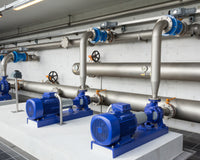
The most important feature of these devices is the arrangement of several impellers mounted in series on a single shaft. Each impeller operates in a separate chamber and increases the water pressure by a specific amount. The combined effect of all stages makes it possible to achieve significantly higher pressure than with single-stage pumps. Multistage pump housings are usually made of stainless steel, which provides corrosion resistance, but cast-iron models designed for operation in more demanding conditions are also available. Depending on their intended use, horizontal pumps can be found, used, for example, in pressure booster sets, as well as vertical pumps, more commonly selected for industrial applications and large circulation systems.
How Multistage Pumps Work
The operating principle is simple yet highly effective. Water drawn in through the inlet connection enters the first impeller, where it gains initial pressure. It then flows through successive chambers, with each stage increasing its energy and pressure. At the outlet, a stable and powerful water flow is achieved, which is essential in extensive installations. This design allows multistage pumps to be used in systems with a high head while maintaining relatively compact device dimensions and quiet operation.
Applications of Multistage Pumps
In single-family homes, multistage pumps are used mainly in pressure booster sets. They provide constant water pressure in the system, allowing several outlets to be used simultaneously—for example, a shower, washing machine, and kitchen tap—without noticeable pressure drops. They are also ideal for supplying automatic garden irrigation systems, where an even water flow is crucial for the proper operation of sprinklers.
On farms, multistage pumps operate in large irrigation systems, often over distances of several hundred meters. Their stable pump operation and ability to work with inverters make it possible to maintain optimal pressure throughout the installation, resulting in even crop irrigation. Modern models are equipped with thermal pump protection and water-level sensors, making them resistant to overloads and dry running.
In industrial plants, multistage pumps supply production lines where stable water pressure is required for many hours of uninterrupted operation. They are also often used in heating and cooling systems, where they circulate the working medium. Thanks to their robust construction and the use of high-quality materials, they can operate in demanding conditions for a long time without frequent inspections.
Advantages of Multistage Pumps
-
High pressure and a high head – even in compact models.
-
Quiet and energy-efficient operation – modern impellers minimize energy losses.
-
Resistance to demanding conditions – thanks to stainless steel and robust seals.
-
Long service life – with regular servicing, pumps can operate for many years.
-
Compatibility with electronic systems – inverters and controllers enable automatic control.
-
Compact dimensions – considering the pressure they provide.
Multistage vs. Single-Stage Pumps – Comparison
The biggest difference between these devices is how they generate pressure. Single-stage pumps have a simpler design and are less expensive, but they are mainly suitable for installations with low pressure requirements. Multistage pumps provide significantly higher pressure and better flow stability, which is why they are used in more demanding systems. The choice of a specific solution should depend on the length of the installation, the number of water outlets, and the required outlet pressure.
Single-Stage Pumps – an Alternative for Less Demanding Installations
Single-stage pumps remain a popular solution for domestic water installations, especially where very high pressure is not required. The simple design of a single-stage pump makes these pumps easy to install and service, while their purchase costs are relatively low. The range includes both single-stage centrifugal pumps, ideal for basic pressure booster applications, and single-stage centrifugal pumps that provide stable water flow in garden irrigation systems. For more specialized needs, a single-stage vacuum pump is also available, used in industry and laboratories.
On our website, you will find a wide selection of models—from basic options to durable single-stage pumps designed for continuous operation. It is worth considering single-stage pumps equipped with modern protection features, such as pressure switches or systems that protect against dry running. By selecting the right device, you can be confident that your installation will operate reliably and efficiently for many years.
How to Choose the Right Multistage Pump
Selecting a pump requires an analysis of several basic parameters:
-
Head – determines the maximum distance over which the pump can deliver water.
-
Water pressure – should remain stable even when several outlets are used simultaneously.
-
Source capacity – the well or tank must provide a sufficient amount of water for the pump.
-
Protection features – systems protecting against dry running, overload, or motor overheating.
-
Compatibility with an inverter and electronic controllers.
It is also worth considering the materials from which the pump is made. For drinking water installations, stainless steel models with hygienic certifications are recommended, while more robust cast-iron designs are often used in agriculture. In the case of large installations, consultation with a specialist is recommended to help select a pump with the appropriate specifications.
Examples of Multistage Pump Models
-
IBO WZI 250 – an energy-efficient horizontal pump designed for domestic pressure booster sets. Its quiet pump operation and corrosion resistance make it an ideal solution for domestic and garden installations.
-
IBO MHI – a pump with high capacity, used in agriculture and industry. Equipped with thermal pump protection and a robust pump motor, it is designed for continuous operation.
-
IBO MCI – a multistage deep-well pump for wells and deep-water intakes. It features a built-in check valve and is designed to work with modern controllers, increasing safety and extending the pump’s service life.
Frequently Asked Questions (FAQ)
Are multistage pumps energy-efficient?
Yes, modern multistage pumps are designed with energy savings in mind. Thanks to their multistage impeller arrangement, they increase pressure smoothly and without sudden surges. When combined with inverters, they consume less electricity than traditional single-stage pumps operating under similar conditions. This makes them an economical solution for installations requiring high pressure.
How often should a multistage pump be serviced?
Servicing should be carried out at least once a year, especially if the pump operates continuously. During an inspection, it is worth checking the condition of the impellers, bearings, and seals, as well as inspecting the pump protection systems. Regular maintenance enables potential faults to be detected early and significantly extends the pump’s service life. In industrial installations, servicing should be performed more frequently.
Can a multistage pump run dry?
No, dry running is very dangerous for any type of pump. A lack of water causes the pump motor to overheat and rapidly wears out the working components. Therefore, it is recommended to use dry-run protection or electronic controllers that switch off the pump when the water level drops. This is a simple way to protect against costly repairs.
Are multistage pumps suitable for drinking water?
Yes, many modern models are made of stainless steel and materials approved for contact with drinking water. It is important to choose a pump with the appropriate certifications. Multistage pumps are widely used in domestic installations and pressure booster sets because they provide constant pressure throughout the network.
Is it worth using an inverter with a multistage pump?
Definitely. An inverter maintains constant water pressure regardless of current demand. It also limits pressure surges, protecting the installation against water hammer. In addition, it reduces energy consumption and extends the pump’s service life, which is why it is especially recommended for systems operating continuously.
Where can I buy IPRO devices and pumps?
You can purchase our IPRO products on the B2B platform. If you are an end customer, we encourage you to check our partner stores and wholesalers. You can also always contact us: +48 22 721 11 92, biuro@dambat.pl.
The information is for educational purposes. Before purchasing, please review the product specifications. Dambat – manufacturer of IBO pumps.