The boiler is working properly, the fuel or gas is burning, and yet one room in the house stubbornly remains cold while the rest heats up without any problems. Often, the heating appliance is not to blame; the issue is the distribution of water between the radiators. In this article, we explain what radiator flow restriction is and what engineers today call hydraulic balancing of a heating system, when a home actually needs it, and how to approach the subject depending on the type of system you have at home.
One cold radiator, others hot: a typical symptom
The scenario is almost always the same. Radiators close to the boiler room are hot, sometimes even scorching, while those farthest away are barely warm or completely cold, even though the entire system is working and the boiler is operating normally. Household members usually suspect a failure, yet the most common cause is simply an uneven distribution of water flow between individual radiators.
Why water chooses the path of least resistance
Imagine several roads leading from the same place to different destinations, one of them short and empty, and the others long and full of bends. Most drivers will choose the first one, even if they do not actually need to go there. Water in a heating system behaves in much the same way. The circulation pump pushes it under pressure toward all the radiators at once, but water will flow more readily where the route is shortest and least “twisty” - to the radiators located closest to the boiler.
These nearby radiators therefore receive more water than they actually need, while the more distant ones have to make do with whatever is left that the pump can still push to them. Without any intervention, this situation will not improve on its own, because water will always choose the easiest path.
What flow restriction and hydraulic balancing are
Before we go any further, it is worth distinguishing between two things that are easy to confuse because they are used as synonyms in everyday speech, even though they are not quite the same.
From flow restriction to presetting
In the past, to restrict the flow to a radiator that was receiving too much, a flow restrictor was installed in it - a small metal ring with a narrow opening, screwed inside the valve, exactly where it connects to the pipe. The opening in the restrictor physically limited how much water could flow through it. The problem was that replacing such a restrictor with another one with a different opening diameter required draining the entire system, so once installed, it was usually left in place for years.
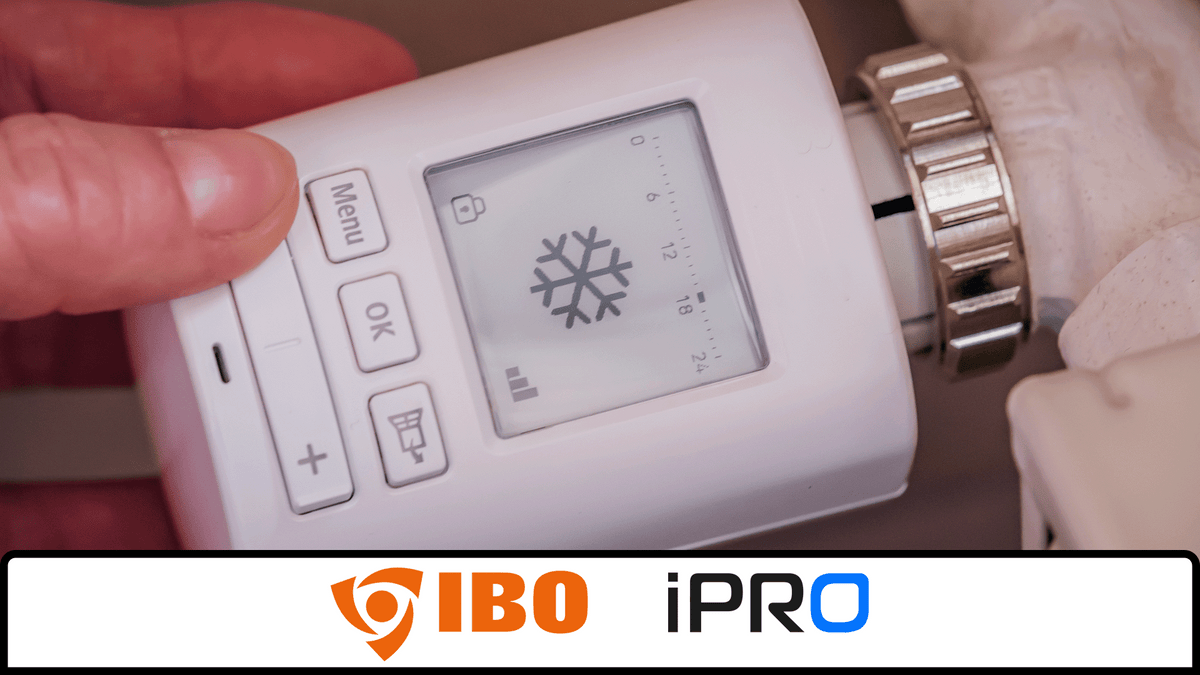
In modern thermostatic valves, the same function is performed by the presetting. Instead of a replaceable metal ring, it is a dial or ring with a scale that limits how far the valve can open, even when the thermostatic head “asks” for full heat flow. It can be adjusted at any time without draining the installation, which is a major convenience compared with the old balancing insert. This is not the same as the number on the head itself, which determines how many degrees it should be in the room. The presetting operates independently of that number and sets the upper flow limit before the head has even had a chance to request anything.
Balancing vs. hydraulic balancing: the difference is not just in the name
However, this is where things get complicated, because “balancing” and “hydraulic balancing” are not simply old and new names for the same procedure. In everyday usage, balancing usually means a trial-and-error attempt carried out independently: someone turns a valve down by half a turn, checks after a few hours whether the radiator has become warmer, and repeats the process until the result seems satisfactory.
Hydraulic balancing in the engineering sense is more than simply turning a valve. It is a methodical process: first, the amount of water each radiator should receive is calculated, taking into account its output and the resistance along the route to it; then the settings are adjusted according to these calculations; finally, measurements are taken to check whether the actual flow rates match the assumptions. In large buildings, this is also required by the PN-EN 14336 technical standard, which requires the process to be documented in a report. In a single-family home, it is rarely done so formally, but the principle remains the same: it is better to aim for a calculated solution than a random one, although the latter can still be better than nothing.
Does your home need it
Not every installation requires additional adjustment. A house with properly selected pipe diameters and settings based on the installation design can, in many cases, distribute heat without drastically throttling individual radiators. It is worth knowing this before someone convinces you that balancing is a mandatory service for every home without exception.
A clear and persistent temperature difference between radiators close to and far from the boiler, recurring season after season, even after checking the simpler causes described below, is a sign that the issue is worth investigating further.
Before you start balancing, check the simpler causes
A cold radiator is sometimes mistaken for a problem requiring valve adjustment, even though the cause lies elsewhere entirely. There are three or four things worth ruling out first, before you reach for the adjustment key at all.
- Air in the system. Air in the radiator or circulation pump causes a symptom very similar to an incorrect flow distribution. Before you start adjusting the valves, check whether the problem disappears after simply bleeding the pump and system.
- Stuck valve pin. After a long summer break, when the thermostatic head has been pressing the valve in one position for months, its moving part can become stuck and stop responding. This looks like a lack of response to adjustment, although in reality the valve simply needs to be gently loosened, not have its setting changed.
- Sludge in the system. Deposits that build up in the pipes over the years restrict flow, much like an incorrectly selected setting. If the radiator is cold at the bottom but warm at the top, this usually indicates that flushing the system will help, rather than adjusting the valves.
- Incorrect circulation pump setting. A pump operating in a mode that is too low can cause exactly the same symptom as a lack of balancing, except that the cause lies in the pump's own setting, not in the valves at the radiators.
Only when these four possibilities have been ruled out and the temperature difference between the radiators still persists is it worth moving on to proper hydraulic balancing.
Not all systems are the same
The approach to balancing radiators varies depending on how your system is built.
Two-pipe system
In a classic two-pipe system, each radiator has a separate pipe supplying hot water and a separate pipe carrying it back to the boiler. The preset is adjusted directly on the valve at the given radiator, and depending on the valve design, adjustment may be made on the supply side or the return side. The principle is the same for both variants: radiators closer to the heat source receive a lower setting, meaning a more restricted flow, while those farther away receive a higher setting to balance resistance along the entire length of the system.
One-pipe system
In older one-pipe systems, water flows in series through successive radiators in one shared loop, like Christmas lights connected one after another in the old-style arrangement. Restricting the first radiator in the sequence too much can significantly limit or even completely cut off the flow to all the following radiators in the same loop, because they do not have their own independent return path. Adjustment in such a system therefore requires much greater caution than in a two-pipe system.
Manifold-based system, or underfloor heating
In underfloor heating based on manifolds, adjustment works completely differently than with radiator valves. Instead of turning a ring with a scale, you set a specific flow rate on small indicators called flow meters, located on the common manifold rail. The value is given in liters per minute, not in valve turns. Shorter loops, for example in a small bathroom, require the flow to be restricted, while longer loops in large rooms need more flow to release sufficient heat along their entire length. Choosing the right manifolds and pump groups directly affects how easy and precise this adjustment is, as does the circulation pump selected for underfloor heating.
The most common mistake: turning up the pump instead of adjusting the valves
A natural reaction when radiators farther away are not heating sufficiently is to turn the circulation pump up to its maximum, hoping that the higher pressure will finally push heat where it is needed. This is a mistake that usually makes the problem worse instead of solving it. A pump running at its highest setting favors the radiators closest to the heat source even more, because they still have the least resistance and will take most of the additional flow. The result may be noisy system operation and noticeably higher electricity consumption.
The correct pump setting, which we discuss in more detail in the article on circulation pump operating modes, is important, but it cannot replace adjustment at the valves. Even the best-selected pump cannot compensate for errors in flow distribution if water immediately escapes to the circuits with the lowest resistance. Only combining an efficient pump with properly balanced valves delivers the full effect.
What you gain from a well-balanced installation
An independent study on this topic, known as the Optimus project and conducted by the German university Ostfalia Hochschule, found that in many residential buildings, hydraulic balancing resulted in average thermal energy savings of around 10 kilowatt-hours per square meter per year. Reducing heat losses caused by uneven flow distribution also allows the heating medium temperature to be lowered more safely without sacrificing comfort. For a typical single-family home, this usually translates into a few percent of annual thermal energy consumption, so it is worth treating this as a real but moderate benefit, rather than a miracle solution for drastically cutting bills.
In addition to the savings themselves, you primarily gain even thermal comfort throughout the house and the ability to safely lower the flow temperature at the boiler further, as described in our article on water temperature in the installation. A balanced installation is the foundation on which further savings can be built sensibly.
If you are looking for equipment that makes it easier to adjust and modernize your installation, our range includes circulation pumps and installation equipment suited to various types of heat sources, and you can read more about pump selection in the article on energy-efficient circulation pumps for central heating systems.
Dambat - a trusted manufacturer of pumps and hydrotechnical equipment with quality certifications.
Frequently asked questions
What is the difference between balancing and preset settings?
It is an evolution of the same idea. A restrictor was a physical, fixed element limiting the flow, screwed into the valve. Presetting is a more modern solution integrated into the thermostatic valve, which can be changed at any time without draining the water from the system.
How do you balance radiators on the return?
In a two-pipe system, the presetting is adjusted on the valve at the radiator, on the side where the regulating element of the specific valve model is located. The exact value depends on the system design and the resistance of the entire system, so there is no single universal number that fits every home.
Who is responsible for cold radiators in an apartment building?
In multi-unit buildings, adjustment of heating risers usually falls under the responsibility of the property manager or housing association, and a tenant's independent adjustment of the restrictor on a riser may be limited by the community's regulations. It is worth reporting the problem to the administration instead of attempting to adjust it yourself.
Does every system require hydraulic balancing?
No. Systems designed with appropriately selected pipe diameters and settings based on the design can partially self-regulate without additional, drastic throttling. Adjustment makes sense primarily where there is a clear and recurring temperature difference between radiators.
Why are the radiators still cold after turning up the circulation pump?
A higher pump speed primarily increases the flow in circuits with the lowest resistance, namely those closest to the heat source. The most distant radiators still will not receive enough water until the flow distribution at the valves is corrected, while the pump itself generates more noise and consumes more electricity.
How many liters per minute should be set on a floor heating flow meter?
The value depends on the loop length and its heat load. Shorter loops, for example in small rooms, require a lower flow rate, while longer loops in large rooms require a higher one, so that each loop releases the appropriate amount of heat along its entire length. It is best to determine the exact values based on the system design.
Is balancing a radiator necessary after every summer break?
Not always. After the summer break, a stuck valve pin or air in the system is often a more common problem than an actual need to change the settings. It is worth ruling out these simpler causes first before deciding to adjust the valves.