The boiler is running, the basement smells of suffocating flue gas, and black, sticky liquid is leaking from the chimney or the ash-pit door. The owner suspects a failure, although most often this is not a factory defect but the consequence of one thing: water returning from the system to the boiler being too cold. In this article, we explain what low-temperature corrosion is, why it destroys a boiler’s heat exchanger faster than you might expect, and how to realistically protect against it.
What is low-temperature corrosion
During the combustion of solid fuel, whether coal, eco-pea coal, pellets or wood, flue gases containing water vapor and small amounts of sulfur compounds are produced. As long as the flue-gas temperature is high, they flow calmly through the chimney. The problem begins when they reach the wall of the boiler’s heat exchanger, which is too cold because it is cooled on the other side by water returning from the home heating system. Flue-gas condensation then occurs - water vapor begins to condense directly on this wall, and the resulting liquid immediately absorbs the sulfur compounds present in the flue gases, turning into diluted acid. This acid attacks the steel in the boiler, which contains neither chromium nor molybdenum to protect it against corrosion, leaving it practically defenseless.
This low-temperature corrosion process is also sometimes called chemical corrosion because, unlike ordinary metal rusting in the rain, the rate of destruction here is determined primarily by the chemical composition of the condensate, rather than by contact with moisture alone. Chemical corrosion intensifies when the boiler operates at a low temperature for a long time, for example when heating the house on milder days.
Why there are two different dew points
The dew point sounds like one specific number, but this is a misleading simplification. Two completely different substances condense in boiler flue gases, within two different temperature ranges, and understanding this distinction explains where the seemingly contradictory figures you may encounter come from.
Water dew point: lower, but more destructive
The first substance is ordinary water vapor. The flue-gas temperature at which it begins to condense extensively is 35 to 45 degrees for coal flue gases and slightly higher, 50 to 60 degrees, for natural gas, which contains practically no sulfur. When the temperature of the water returning to the boiler falls below this value, the entire amount of water vapor begins to condense extensively at once, rather than only a small portion of it. Due to the amount of liquid formed, this threshold is responsible for the most violent and fastest destruction.
Acid dew point: higher, but less acid
The second substance is concentrated sulfuric acid, and its dew point is surprisingly high: with the typical sulfur content of coal, it can range from 90 to as much as 140 degrees. This means that individual drops of the most highly concentrated acid can appear even in the hot part of the chimney, long before water vapor begins to condense. Fortunately, the amount of sulfur itself in the flue gases is small, so these early drops cause slow, localized damage rather than widespread destruction.
This distinction leads to the practical safe temperature discussed in the industry: a return temperature no lower than 50–55 degrees. This is not an arbitrary number, but a value just above the water dew point - the threshold below which extensive, rather than merely localized, condensation of water vapor begins.
Why this destroys steel so quickly
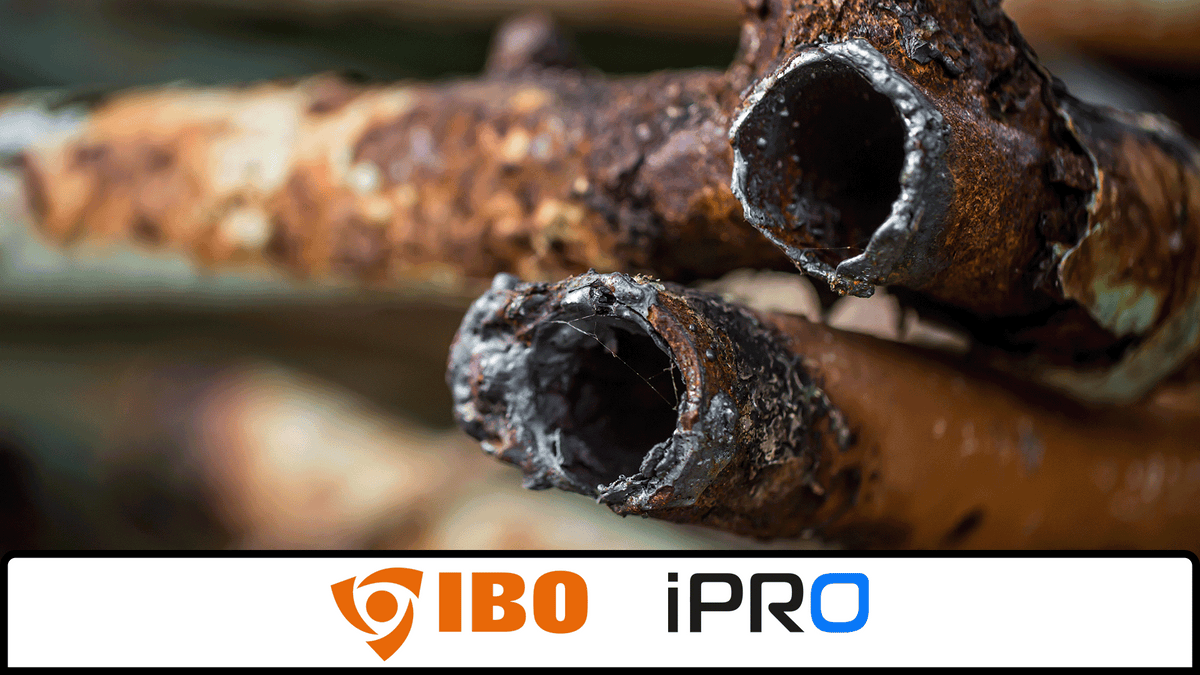
Diluted sulfuric acid sounds less dangerous than concentrated acid, but in this case the dilution itself is the problem. This condensate spreads as a thin layer over a large surface of the heat exchanger and eats into the steel evenly, instead of concentrating the damage in one place. Under favorable conditions, the corrosion rate of the heat exchanger can exceed 1 millimeter of steel thickness loss per year. For a boiler plate five or six millimeters thick, this means a real risk of being eaten through within just a few heating seasons, especially in solid-fuel boilers operating at a low temperature for most of the season.
Condensing boilers work the other way around
This is where a distinction appears that is easy to overlook but changes the entire interpretation of the subject. The same water-vapor condensation that destroys an old boiler is intentional and desirable in a modern gas condensing boiler. These new-generation low-temperature boilers are designed to deliberately cause condensation because this allows them to recover the additional heat hidden in the water vapor instead of uselessly releasing it through the chimney. Their heat exchangers are made of stainless steel or aluminum-silicon alloys, which are resistant to constant contact with condensate.
The boiler corrosion discussed in this article therefore applies exclusively to ordinary carbon steel, which is used to make solid-fuel boilers and older, non-condensing gas boilers. Treating both types of boiler the same way, as if a cold return harmed them identically, is one of the more common mistakes found online.
Tar formation: an earlier warning sign
Before corrosion manages to eat through the plate, an earlier, more visible warning sign usually appears: tar. Burning wood, coal or pellets does not involve simply setting the fuel block on fire, but releasing volatile, combustible gases from it in a process called pyrolysis. For these gases to burn out completely and release clean heat, they need a temperature of around 600 to 700 degrees in the combustion zone. If very cold water is immediately behind the firebox wall, this wall rapidly draws away heat and locally extinguishes the flame before it can burn all the volatile compounds. Unburned, heavy hydrocarbons then condense directly on the cold steel, forming a sticky, tar-like layer. This layer acts as insulation, so the boiler begins to consume more fuel to achieve the same heating effect, while the house still remains underheated.
What return temperature is safe
According to the comparison of both dew points, the appropriate temperature of the water returning to a solid-fuel boiler or an older gas boiler is usually no lower than 50–55 degrees. This is separate from the general water temperature throughout the system, which is regulated by the heating curve, but the two issues are connected: the lower the safe threshold for a given boiler, the more freedom there is when setting the rest of the system.
Boiler manufacturers may explicitly link this threshold to the length of the warranty provided for the tightness of the boiler body: maintaining a return temperature above 55 degrees may be a condition for a longer, five-year warranty, while protection using a four-way valve maintaining a lower threshold, around 45 degrees, may be covered by only a three-year warranty. The difference in the number of warranty years shows how seriously solid-fuel boiler manufacturers themselves treat this issue.
How to protect against it
The solution is to prevent water that is too cold from reaching the heat exchanger at all. This can be achieved in several ways, from the simplest to the most comprehensive.
The first is a four-way valve, which redirects some of the hot water from the boiler directly into a short boiler circuit, raising the return temperature before the rest flows into the system. We describe the full design and installation principles of such a valve, along with the most common installation errors, separately.
The second method is the IBO MIX TVR thermostatic return protection valve, which operates completely automatically, without a controller or electrical power supply. Inside, it has a temperature-responsive wax element that keeps the water returning to the boiler at a preset, safe level, automatically directing hot water into the short circuit until the heat exchanger warms up.
The most comprehensive solution is a ready-made IBOMAT AMG return protection group, installed directly on the return pipe. It already contains an integrated thermostatic valve, its own circulation pump, insulation and a thermometer in one ready-made set, so the installer does not have to select and connect separate components. In an extended boiler room, where a solid-fuel boiler supplies both radiators and underfloor heating, such a return protection group often operates together with a separate three-way circuit, for example in a GP PRO 3D-S pump group with a thermostatic three-way valve, preparing a lower temperature for the underfloor heating system.
Will this definitely happen
One honest qualification is worth adding at the end. A low return temperature alone does not guarantee a rapid disaster. Actual accelerated boiler damage usually requires several factors to coincide: damp, lower-quality fuel, a boiler operating with high combustion efficiency, and long periods of boiler operation at a low temperature, for example during mild transitional weather. Some solid-fuel boilers have heated homes at low temperatures for years without a serious failure because these additional factors did not occur with sufficient intensity. This is not a reason to disregard boiler corrosion prevention, but rather to treat the issue realistically: the more of these factors coincide, the greater the risk, and proper return protection costs a fraction of replacing a prematurely damaged boiler.
Dambat - a trusted manufacturer of pumps and hydrotechnical equipment with quality certificates.
If you are looking for ready-made solutions to protect your boiler, our range includes return protection valves and boiler-room equipment from the IBO and IPRO brands. If you suspect ordinary air in the system rather than corrosion, see our guide to bleeding the pump and central heating system.
Frequently asked questions
What is low-temperature boiler corrosion?
It is a phenomenon in which water returning from the system that is too cold cools the heat exchanger wall below the condensation point of the water vapor contained in the flue gases. The condensed vapor combines with the sulfur compounds present in the flue gases, forming an acid that eats away at ordinary boiler steel from the inside. It is also sometimes called chemical corrosion.
What is the minimum safe return temperature to the boiler?
For solid-fuel boilers and older gas boilers without a condensing function, the usual threshold is 50–55 degrees. Below this value, the risk of extensive water-vapor condensation and accelerated heat-exchanger corrosion increases.
Does low-temperature corrosion also affect condensing boilers?
Not in the same sense. Condensing boilers are designed to deliberately cause water-vapor condensation and recover additional heat from it, while their heat exchangers are made of materials resistant to constant contact with condensate. The problem applies exclusively to ordinary carbon steel in solid-fuel boilers and old, non-condensing gas boilers.
Why does my boiler produce tar and smell?
This is usually a sign that the firebox wall is too cold to burn all the volatile compounds released from the fuel during combustion. Unburned hydrocarbons condense on the cold steel as sticky tar instead of releasing heat to the system.
How long does it take for low-temperature corrosion to destroy a boiler?
Under favorable conditions, meaning damp fuel and prolonged operation at too low a temperature, significant damage or even leakage from the heat exchanger may occur after just two to four heating seasons. Low temperature alone, without the other factors, does not necessarily lead to such rapid destruction.
How can I protect the boiler against a cold return?
The most common solutions are a manually operated or actuator-controlled four-way valve, an automatically operating thermostatic return protection valve, or a ready-made pump group combining both elements in one set. All of these solutions redirect some of the hot water from the boiler into a short circuit before the rest flows into the system, raising the return temperature to a safe level.