Why do cable length and diameter (cross-section) matter - especially at higher voltages?
A simple start
Each electrical cable is a "path" for electricity. If the road is too narrow (thin cable) or too long, problems arise - just like on a narrow and long road, where traffic jams occur and cars drive slower. In electrical installations, these "plugs" are voltage drops, energy losses and heating of wires.
Therefore, you always need to select a cable with the appropriate diameter (cross-section) and appropriate length for a specific installation.
Why is it so important?
1. Voltage drops
The longer the cable, the greater the resistance. Current must "push" through the wire, and this causes a voltage drop at the end of the cable.
➡ Example: if a device needs 230 V and only 210 V reaches through a long and thin cable, it may work worse, wear out faster or not turn on at all.
2. Cables heating up
Too small cross section = too high current density. The cable starts to heat up.
➡ This means a risk of fire and a shorter lifespan of the installation.
3. Security and disruption
Each cable produces an electromagnetic field and acts a bit like an antenna. The longer it is, the easier it is to collect interference from the environment and may affect other devices. Therefore, in the case of higher voltages, special cable designs are used (e.g. shielded, twisted pairs, coaxial cables).
4. Electric length and wave phenomena
At very high frequencies and voltages, an ordinary cable stops behaving like an "ordinary wire". It begins to act like a transmission line or antenna, with signal reflections and energy losses occurring. Then the key becomes:
- constant impedance,
- signal propagation speed (so-called shortening factor),
- appropriate conductor geometry.
Cables and voltage – basic division
- Low voltage (up to 1 kV) – typical home and industrial installations.
- Medium voltage (1–36 kV) – distribution between transformer stations.
- High voltage (above 36 kV) – energy transmission over very long distances.
The higher the voltage and the longer the section, the larger the cable cross-section that must be used.
A cable is a "way" for electricity. When this path is too narrow (small cross-section) or too long, voltage drops occur, the wires heat up more and the devices may operate unstable. Proper selection of length and cross-section improves safety and reduces energy losses.
Simply put: three consequences of poor selection
- Voltage drop — the longer the cable, the greater the resistance and the lower the voltage at the end of the line. This translates into poorer operation of the devices (under heavy loads it may even prevent starting).
- Overheating — too small a cross-section for a given current means higher current density and more heat, which reduces durability and increases the risk of fire.
- Disturbances — long cables act a bit like antennas: they emit and collect electromagnetic fields. Appropriate structures (screen, twisted pair, coaxial) and rational lengths limit these effects.
How to choose a "starting" cross-section (intuitively)
In practice, we start by estimating the current: I = P/V (power divided by voltage). This gives you a starting point for selecting a cross-section that will not heat up excessively and will limit voltage drops.
Examples of approximate values from the tables (installation and insulation conditions may modify them): 1.5 mm² ≈ 16–20 A, 2.5 mm² ≈ 24 A, 4 mm² ≈ 32 A.
Voltage drops increase with length and decrease with larger cross-section
A long cable has greater resistance, so for the same current it causes a greater voltage drop. Increasing the cross-section reduces the resistance of the conductor, limits losses and heating - hence, in long sections or with higher loads, larger cross-sections are selected to maintain stable Power supply (and device life).
EMC interference and cable geometry
Any conductor carrying current radiates an electromagnetic field and can pick up interference from the environment - the effect increases with the length of the cable. Constructions such as screen (principle of Faraday cage), concentric (symmetrical field around the vein) or twisted pair (interfering voltages cancel each other) significantly limit this. At very high voltages, a grounded screen can also dissipate leakage currents and equalize stresses in the insulation.
"Electrical length" and when a regular cable ceases to be "ordinary"
In addition to the meter long physical length exists electrical length — how many wavelengths fit in the cable at a given frequency. If the cable is "electrically short" (typically l < λ/10), voltage and current are almost constant along it. When the length approaches a fraction of a wavelength, wave phenomena appear (reflections, phase shifts) and the cable must be treated as transmission line with a specific characteristic impedance.
Electrical length depends on shortening factor (English velocity factor) - the wave is "closer" to light in a vacuum when the dielectric has lower permittivity. VF determines how fast the signal propagates in a given cable relative to the speed of light and results from the distributed parameters L and C (inductance, capacitance) of the cable structure.
In practice: the higher the operating frequency and the longer the distance, the more important the impedance, matching and geometry of the cable are - to avoid reflections and losses (ordinary "connecting wires" are no longer sufficient).
Voltage categories and cable selection
- Low voltage — up to 750 V / 1 kV (0.6/1 kV): building and industrial installations.
- Medium voltage — 1–36 kV: distribution between stations.
- High voltage — >36 kV: long-distance transmission.
As the voltage and length of the line increase, the importance of appropriate cross-section, insulation and construction (screens, coatings, materials) increases to maintain parameters, safety and durability.
Why are three-phase cables so important today?
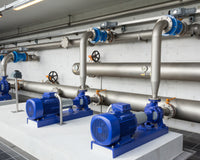
More and more home and industrial devices use three-phase power supply (3×400/230 V): deep-well pumps, induction cookers, as well as electric car charging stations. A three-phase connection allows you to transmit more power with less current in a single wire, which translates into lower voltage drops, less heating of the wires and higher efficiency of the entire installation.
- More power, less current: for the same power, the phase current is lower than in a single-phase system (P = √3 · Ul-l · I · cosφ). This often means a smaller required cross-section or greater thermal reserve of the cable.
- Stable engine operation: submersible pumps with three-phase motors have smoother torque, easier starting and higher efficiency, which reduces the risk of overloads and extends the service life.
- Even installation load: Induction cookers and other large loads can divide the load into 2-3 phases, thanks to which they place less load on a single circuit and limit local voltage drops.
- Faster EV Charging: 3-phase home chargers (e.g. 11 kW or 22 kW AC) use several phases to shorten the charging time and not to "choke" one wire with high current.
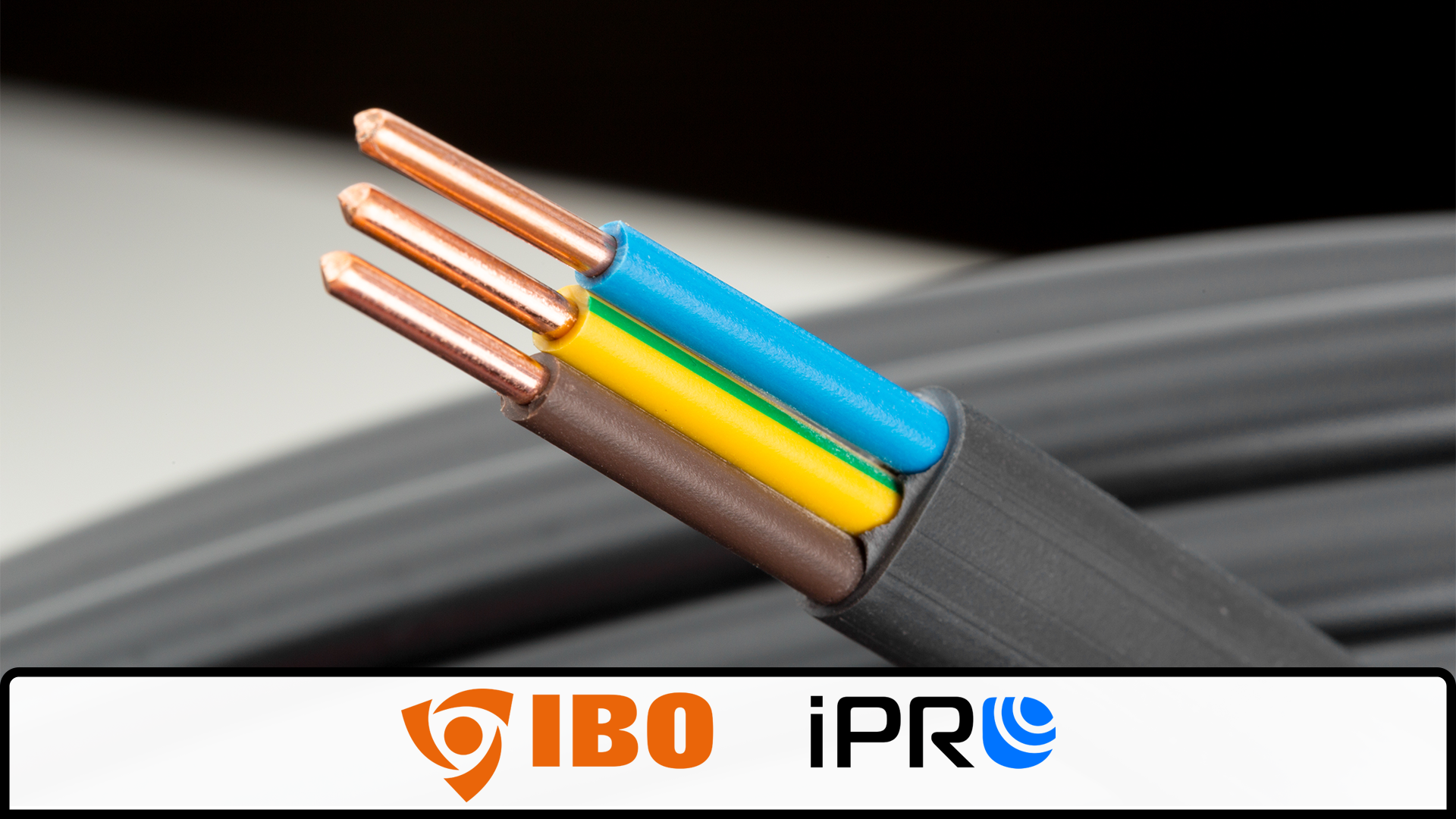
- Security and compatibility: typical three-phase cables have 5 wires (L1, L2, L3, N, PE). Correct selection of cross-section, number of conductors and protections (overcurrent switches, RCDs) reduces heating, asymmetry and the risk of damage.
In practice, with longer sections and higher powers (pumps, kitchens, chargers), a three-phase system helps maintain the voltage within the required range, reduce losses and avoid "knocking out" protection devices. Therefore, when planning new installations, it is worth immediately providing three-phase cables with an appropriate cross-section and structure.
Practical conclusions
- Know your load (power/current) and route length - this is the starting point for selecting cross-section and assessing voltage drop.
- For long distances or larger currents, choose larger cross-sectionto reduce losses and heating.
- When the environment is "noisy" (inverters, motors, radio RFI) - consider shielded/twisted/coaxial cables and keep runs as short as possible.
- For higher frequencies/long distances, treat calls as transmission lines: pay attention to impedance and matching.
Choose wisely - use calculators
To check quickly required cross-section and voltage drop over a given length, use our tools:
Note: The actual permissible currents depend on, among others, on the method of installation, ambient temperature and insulation. Use the manufacturer's catalog data and applicable standards, and if in doubt, use calculators and/or consult the installation designer.