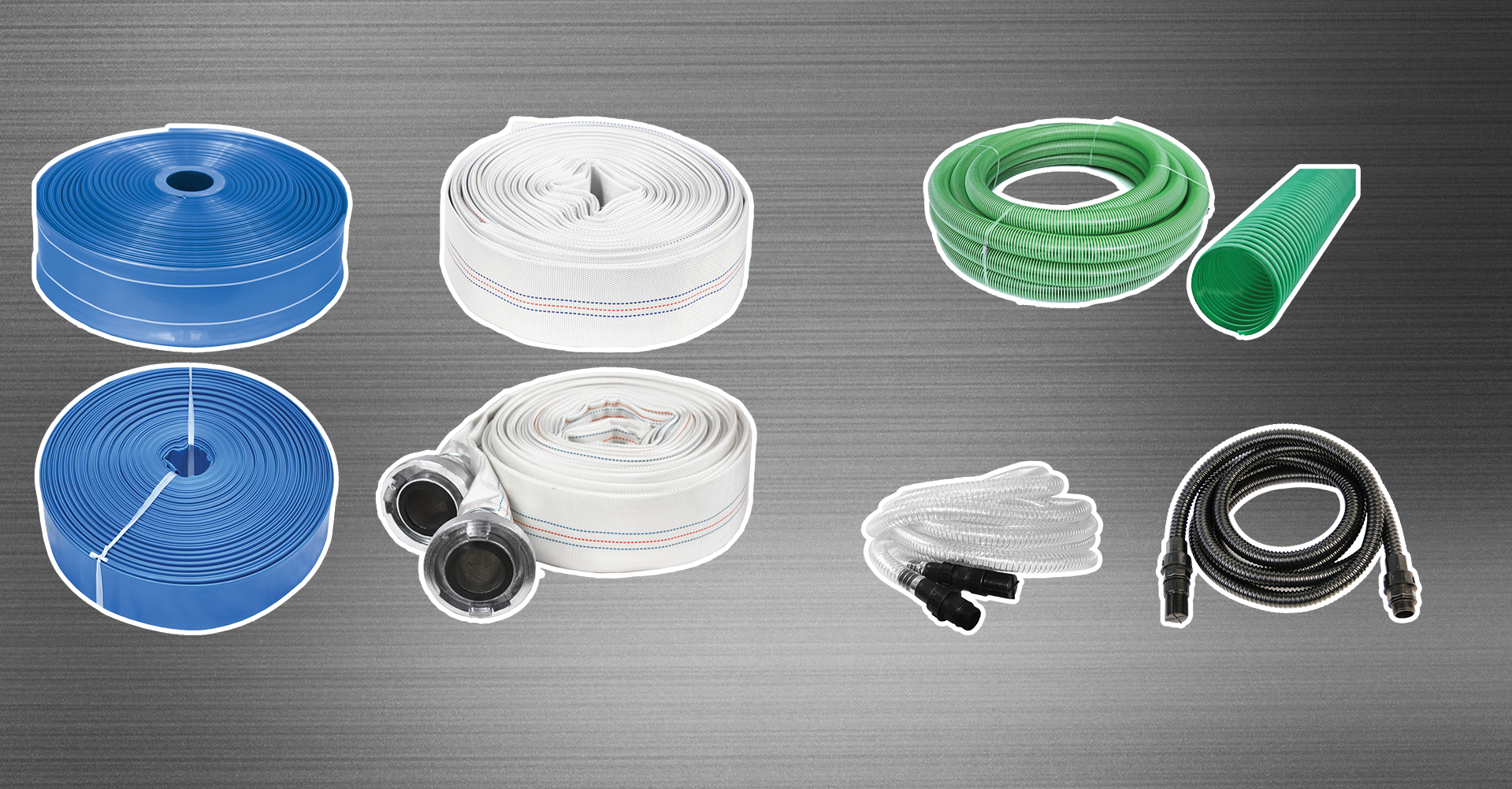
Discharge hoses cooperating with submersible pumps are used to pump out water or sewage. There are many hoses available on the market that differ in material, strength and diameter. What parameters should be taken into account when choosing a hose for a submersible pump? Welcome to the entry.
Material and working temperature
When choosing a hose for a submersible pump, it is worth paying attention to the material it is made of and the temperatures at which it can be used. Most often delivery hoses are made from durable, resistant to mechanical damage PVC. PVC submersible pump hoses can operate at positive temperatures, from 1 to approximately 30-35 degrees C.
Maximum working pressure
Submersible pumps they work at different pressures. An important parameter when choosing a discharge hose for submersible pumps is: maximum working pressure. This is especially important in the case of hoses with the smallest diameter. The strength of delivery hoses with a diameter of 1½ inches and larger available from Dambat is 4 bar. In the case of hoses with smaller diameters, their durability is lower.
Diameter
Pump hoses come in several diameters adapted to the type of pump. The smallest ones have a diameter 25 mm or 1”. There are also diameter snakes 1 ½” (40 mm), 2” (50 mm), 2 ½” (65 mm), 3” (75 mm). Dambat's offer includes delivery hoses in all diameters.
Length
This is only a seemingly less important criterion. When choosing a hose for a submersible pump, we should know what length we need to properly drain water or sewage from flooded rooms, wells or excavations. Delivery hoses available from Dambat are sold in sections min. 10 meters. The maximum length of a 1” diameter hose roll is 50 meters. Larger diameter hose reels can be up to 100 meters.
Choosing the right hose for a submersible pump can be problematic, so it is worth seeking advice from professionals before purchasing it. Dambat specialists are always happy to help you match the right hose to each submersible pump.