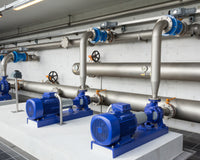
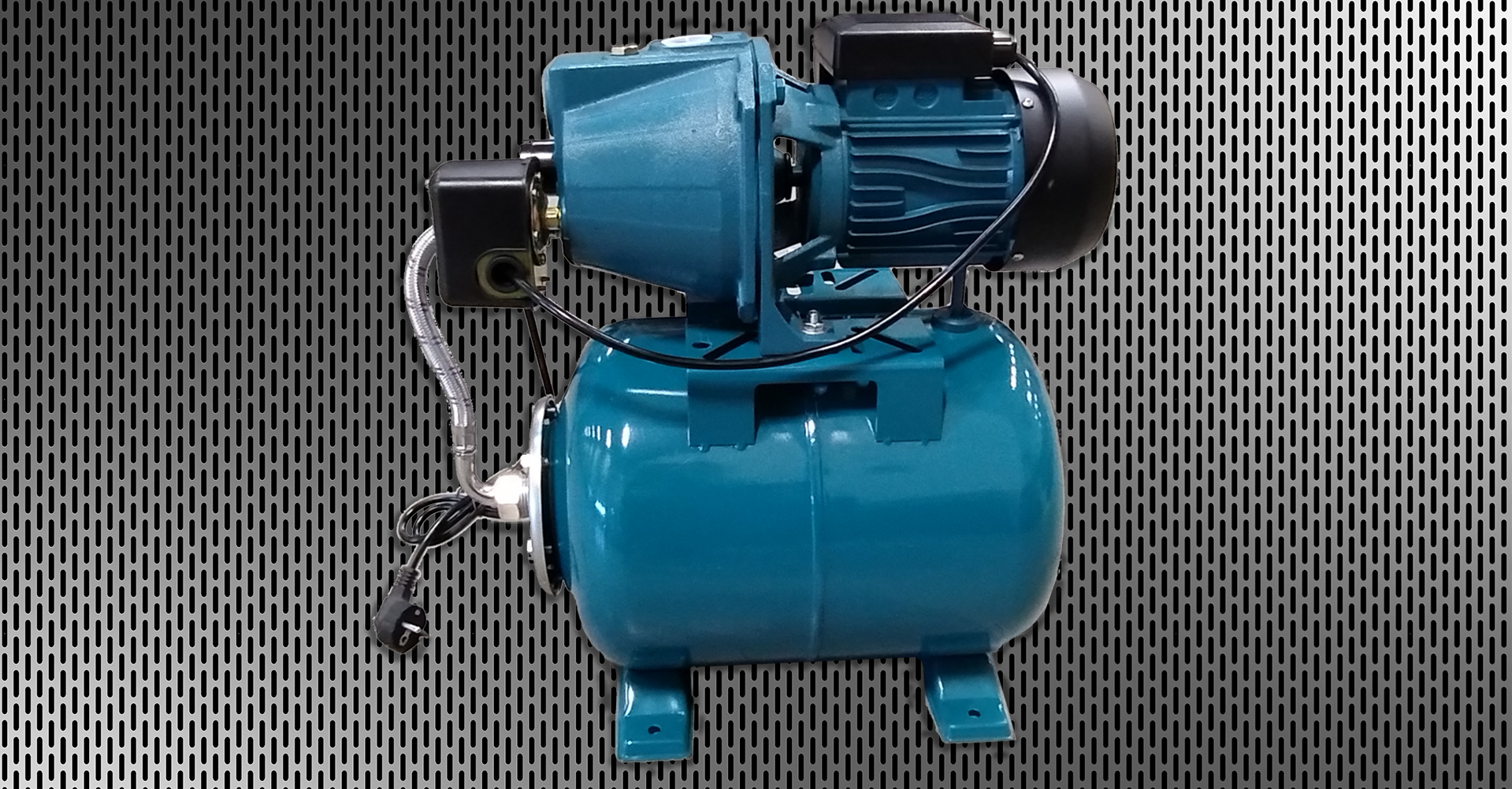
A hydrophore is a pressure installation that improves the use of domestic water. An integral element of the hydrophore set is a pressure tank, pump and pressure switch. The system is responsible for maintaining the correct medium pressure in the pipes of the hydraulic network. The hydrophore protects the water pump against excessive use and ensures a constant water flow. Installing a hydrophore is necessary if we use our own water intake or if the pressure at the point of connection to the water supply is too low.
How to choose good hydrophore?
- Pressure tank capacity. The size of the hydrophore tank will depend on the maximum water demand in the powered facility. If the hydrophore is to supply a single-family house with utility water, its size should not be less than 100 liters. It all depends on the number of household members and the amount of water they use. The size of the hydraulic installation in the building is also important in this context.
- The shape of the pressure vessel. Pressure tanks in hydrophore sets are available in various shapes, although the most popular of them is the cylindrical model. The cylindrical tank may have a vertical or horizontal orientation. Its specific variant should be adapted to the spatial possibilities of the room. When installing a tank in a basement, there are usually no major restrictions. However, they may appear if we want to install the tank in the bathroom, for example under the washbasins.
- Tank construction technology. Hydrophore tanks can be membrane (diaphragm) or galvanized. Membrane tanks have a rubber tank for collecting water. They are most often used indoors because the membrane should not be exposed to UV rays. However, galvanized tanks are resistant to weather conditions, so they can be successfully installed outdoors. In recent years, membrane tanks have become increasingly popular. Unlike expansion tanks, they have a membrane in a perpendicular position to the tank, the interior of which is covered with a special coating intended for contact with drinking water. Such tanks are virtually maintenance-free because the pressure level inside the tank only needs to be checked once a year. The PHU DAMBAT company was one of the first to introduce this type of tanks marked as to the Polish market IBO ITALY FIX, in the production of which Italian diaphragms were used. The biggest advantage of this type of tanks is an extremely long warranty, up to 5 years.
- Type of hydrophore pump. Hydrophore sets use surface pumps (self-priming) or submersible pumps. The first ones are installed next to the tank or on the tank. However, it is worth bearing in mind that such a pump is characterized by an increased level of noise emissions, so it should not be located in utility rooms, e.g. in the basement. The second ones are located under the water surface, but their installation requires a deep well. A submersible pump should be installed if the water level in the well is below 7-8 meters. Hydrophore pumps can also be single-stage or multi-stage and have: Power supply single-phase or three-phase.
-
Hydrophore pump power. The pump power should be adjusted to the demand for domestic water. The general rule is that the pump capacity must be greater than the expected water consumption. What is important is not only the value of water demand in the facility Qmax, but also the minimum required water pressure at the outlet from the hydrophore plant Hmin. Based on these values, the required lifting height Hp of the hydrophore set can be determined, to which we select the pump power. For this purpose, it is necessary to analyze the product selection card. The performance of the well should be taken into account with this criterion. Unfortunately, buyers often assume that the more powerful the pump, the better, but this is often a wrong assumption. Especially during dry periods, users with very efficient pumps with a capacity above 100 l/min are exposed to the so-called dry run, which results in the pump seizing. During a drought, the water level in the well usually decreases, and if the pump has a high capacity, there is a risk of breaking the water column, which will cause the pump to operate without water, which leads to the hydraulics seizing up, then we only have one thing to do - buy a new pump.
In the case of such pumps, it is worth equipping them with additional dry-running protection, which will allow many years of trouble-free operation of the device.