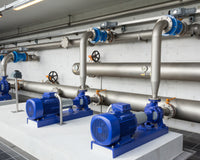

A hydrophore is an integral element of a hydrophore installation, whose task is to maintain constant water pressure. The hydrophore works with a surface pump and such a set is necessary to draw water from your own intake. Hydrophores are used in summer houses, allotment gardens, but also in single-family houses, service points and industrial plants. The costs of installation and operation of hydrophores are low. However, the question arises: where to install the hydrophore?
Compact water pump under the sink
Hydrophores produced nowadays are characterized by small dimensions. The hydrophore set consists of a pump and a water-air tank and in a compact version it can be successfully installed inside the house. Hydrophore sets are often placed in the basement of a building. Some models of water pumps can even fit under the sink, which is a practical and convenient solution. The capacity of such tanks is a maximum of 50-60 liters. Ready-made sets for sale are convenient to use and quiet. Please remember that tanks with a pressure greater than 0.005 MPa/m³ must have a UDT certificate, and those used for drinking water should also have a certificate from the National Institute of Hygiene.
The water pump at home can be installed in a room where the temperature is not lower than +5°C but not higher than +40°C. It must have efficient ventilation, electrical and heating installations. The floor under the hydrophore should have a slope of at least 1% towards the sewer grates. However, these are not all the requirements. The room in which we intend to install the hydrophore cannot be lower than 2.2 m and its minimum area is 5 m2. It is necessary to provide free access to the inspection hole. The hydrophore tank is placed at a minimum distance of 0.6 m from the wall. The pump itself from the set cannot be located closer to the wall than 0.5 m. All installations must be operational and watertight. The capacity of the sewage system cannot be lower than the capacity of the pump, so that it is able to discharge water in the event of a hydrophore failure.
Traditional hydrophore set in a concrete tank
Compact and modern hydrophores they are very quiet, so they can be installed inside the house. However, traditional pressure booster sets are much larger and operate much louder. For this reason, it is better to install them outside the house. A frequently practiced solution is to place the hydrophore in an underground concrete tank. This option allows, on the one hand, to hide the pressure booster set, and on the other hand, it provides effective acoustic insulation. The tank is made of reinforced concrete, insulated with a moisture-proof foil and insulated with a layer of polystyrene. The access opening is secured with a reinforced concrete slab and a waterproof cover. Electricity should be supplied to the hydrophore station constructed in this way to power the heater under the tank and the lighting. However, this solution is not protected against flooding and carries the risk of ventilation problems.
Hydrophore: application, construction and selection of the appropriate system
Hydrophore – although the name may sound technical, it is the device that plays a key role in many water installations. Its main task is maintaining constant water pressure, which translates into the comfort and reliability of the entire system. To put it simply, the hydrophore ensures that water flows with the appropriate force and is available whenever it is needed.
This device is used in various places - from single-family houses, through farms, to industrial plants. Thanks to the hydrophore, you don't have to worry that the water won't reach where it should.
Where are hydrophores used?
Hydrophores are widely used in many sectors. Here are some examples of their use:
-
Home plumbing installations – ensure comfort of everyday use, e.g. when bathing, washing up or watering the garden.
-
Agriculture – constitute the basis of irrigation systems, enabling precise water supply to crops.
-
Industry – support technological processes that require constant and controlled water pressure.
Without hydrophores, many of these processes would be impossible or much less effective.
How to choose the right hydrophore?
Selecting the right hydrophore is quite a challenge. It requires taking into account several key factorsthat affect the efficiency and durability of the entire system:
-
System size – the device should be adapted to the size of the installation and water demand.
-
Pump type – you can choose between self-priming pumps (for shallow intakes) and submersible pumps (for deeper wells).
-
Pressure tank capacity – the greater the demand for water, the larger the tank should be.
Example: In a single-family house, a small set with a self-priming pump is enough. However, on a large farm, a system with a submersible pump and a larger tank will work better. It is crucial to understand how the individual elements work togetherto choose a solution that perfectly fits your needs and avoid unnecessary costs.
Modern technologies in hydrophores
Hydrophores also follow technological progress. Models equipped with automatic control systems. What does this mean in practice?
-
Device monitors blood pressure independently in the installation.
-
The pump only starts when necessary, which allows you to save energy.
-
The system works more efficiently, is more reliable and extends the life of the entire installation.
Effect? Lower energy consumption, greater reliability and comfort of use. Modern hydrophores are an investment in efficiency and durability.
Hydrophores and sustainable water management
In the era of growing ecological awareness and the need to save natural resources, hydrophores are gaining importance. Their role in sustainable water management cannot be overestimated:
-
They reduce water losses by precisely controlling its flow.
-
They ensure reliable deliveries where water is really needed.
-
They support intelligent resource management systems, which is particularly important in the context of climate change.
What will the future bring? It's hard to predict, but one thing is certain - Hydrophore technologies can play a key role in building a more sustainable world.
Hydrophores – a pillar of the future?
Everything seems to indicate that hydrophores will become one of the foundations of modern, sustainable water management. Their role will grow with the need to effectively use resources and implement intelligent technological solutions.
Time will tell exactly what role they will play. But it is worth taking a closer look at them today - because the future may belong to them.
The principle of operation of a hydrophore in a water installation
Hydrophore is an irreplaceable device in places without access to the municipal water supply network. Its main task is maintaining stable pressure in the water system, which enables comfortable use of water - both in the kitchen, bathroom and when watering the garden.
Importantly, the hydrophore pump does not work constantly. It only starts when the system pressure drops below a certain level. This method of operation translates into: lower energy consumption and extended service life of the entire system.
Hydrophore installation is a carefully designed system that ensures the appropriate strength of water flow - regardless of whether someone is taking a shower or watering the garden. This system works perfectly in:
-
single-family houses,
-
on recreational plots,
-
on farms,
-
and wherever there are fluctuations in water demand.
Even with a sudden increase in water consumption, the hydrophore works flawlessly – no pressure drops and no stress for the user.
The role of pressure and automation in the operation of the hydrophore
The efficient operation of the hydrophore is based on precise pressure control supported by automation. The key element of this system is pressure switch – a pressure switch that:
-
turns on the pump when the pressure drops below the set minimum,
-
turns it off when the pressure reaches the upper threshold.
Thanks to this the pump only runs when necessary, which allows save energy i minimize the risk of failure.
The second important element is pressure gauge – a small but extremely useful device that shows the current pressure in the tank. Thanks to it, the user has full control over the operation of the installation.
The pressure switch and the pressure gauge make a harmonious duo, which ensures:
-
smooth operation of the system,
-
safety of use,
-
adapting work to current needs,
-
reliability even with intensive water consumption.
Hydrophore components
Hydrophore it is a complex but well-thought-out system in which each component plays an important role. It works like a well-coordinated team - each element has its own task, and together they create reliable support for the home water installation. Understanding the structure and operation of a hydrophore will help you not only in choosing the right model, but also in its proper operation and maintenance.
So let's take a look at what a complete hydrophore set consists of and what role its individual elements play.
Hydrophore tank – function and importance
Hydrophore tank is the heart of the system - it serves as a warehouse where water and compressed air are collected. Its presence means that the pump does not have to run every time you turn on the tap.
Benefits of using the tank:
-
Energy saving – starting the pump less frequently reduces electricity consumption.
-
Extending the life of the system – fewer pump cycles mean less mechanical wear.
-
Stable pressure – allows you to use water in several points at the same time without pressure drops.
In practice, this means greater comfort of use and operational reliability of the entire water installation.
Hydrophore pump – types and applications
Hydrophore pump is the element responsible for pumping water into the system. Its choice depends primarily on the depth of the water source. There are two main types of pumps:
|
Pump type |
Application |
Shot depth |
|---|---|---|
|
Self-priming pump |
Perfect for shallow wells and tanks |
Up to approx. 7-8 meters |
|
Submersible pump |
For deep water intakes |
Even up to several hundred meters |
Selection of the appropriate type of pump to local conditions is crucial - only then will the system operate efficiently and failure-free.
Pressure switch and manometer – pressure control and regulation
The last, but extremely important element of the system is pressure switch i pressure gauge – a duo responsible for controlling and regulating the pressure in the installation.
-
Pressure switch – automatically turns the pump on and off depending on the pressure level. Thanks to this, water flows from the tap with the appropriate force, without fluctuations.
-
Pressure gauge – indicates the current pressure in the tank. It allows you to quickly assess whether the system is working properly.
Together they create a control system that ensures safety, stability and comfort of use – without the need for constant interference on your part.
Types of hydrophore tanks
Selection of the appropriate hydrophore tank it is a key element of an efficiently operating water installation. There are several types of tanks available on the market, differing in design, purpose and functionality. Each of them has its own unique advantages, so it is worth taking a closer look at them to consciously choose the model best suited to the needs of your home, garden or company.
Diaphragm tank – structure and advantages
Diaphragm tank, also known as a hydrophore with a membrane, is a modern solution in which water and air are separated by a flexible diaphragm made of rubber. Thanks to this, water does not come into contact with the metal, which is important reduces the risk of corrosion and extends the life of the device.
How does such a tank work? The diaphragm works like a balloon - it expands and contracts depending on the amount of water. This allows for maintaining constant pressure in the installation and ensures smooth operation of the system without sudden pressure surges.
The most important advantages of the expansion tank:
-
No water contact with metal – lower risk of corrosion.
-
Stable pressure – comfort of use and protection of the installation.
-
Availability of various capacities – easy adaptation to domestic and industrial needs.
-
High durability and reliability – long-lasting and trouble-free operation.
This is an ideal solution for people who have limited access to water and want to effectively manage its consumption.
Galvanized tank – a traditional solution
Galvanized tank this is a classic solution that is still very popular. Made of zinc-coated steel, it is characterized by: solidity and resistance to mechanical damage. Even though the water has direct contact with the metal, the simplicity of the design and proven technology still convince many users.
In a galvanized tank it plays a key role airbag, which is responsible for maintaining the appropriate pressure in the system. Thanks to this, it is possible to provide water efficiently even with high consumption.
The most important features of a galvanized tank:
-
Mechanical strength – ideal for intensive use.
-
Simple design – easy operation and service.
-
Requires regular air replenishment – the need for periodic maintenance.
-
Proven technology – a popular choice in households and farms.
This is a solution for people who value traditional, reliable technologies and they are not afraid of simple service activities.
Stainless steel tank – durability and corrosion resistance
Hydrophore tanks made of stainless steel is a proposition for the most demanding users. Made of high-quality stainless steel, they offer maximum corrosion resistance and exceptional durability, making them an ideal choice for both domestic and industrial applications.
Their smooth, shiny surface not only looks aesthetic, but also... makes it easier to maintain hygiene, which is of great importance in industries such as food and pharmaceuticals. Additionally, these tanks are perfect for difficult conditions where other materials fail.
The most important advantages of a stainless steel tank:
-
Rust and corrosion resistance – ideal for working in a humid environment.
-
High durability – an investment for many years.
-
Easy to keep clean – especially important in the food and pharmaceutical industries.
-
Aesthetic appearance – modern design and functionality in one.
This is a choice for those who bet on quality, reliability and peace of mind for years. And who knows - perhaps even more advanced materials will soon appear that will revolutionize hydrophore technology.
Types of pumps used in hydrophores
In hydrophore systems the pump plays a key role – it is responsible for supplying water to the installation and maintaining the appropriate pressure. Correct pump selection affects not only the effectiveness of operations, but also durability and failure-free operation of the entire system. So how do you choose the right type? Below we present the most commonly used types of pumps in hydrophores and their applications.
Self-priming pump – for shallow water intakes
Self-priming pump is the perfect solution for people using shallow water sources, such as dug wells or above-ground tanks. Its greatest advantage is ability to draw water independently – without the need to prime the cables first.
Why is it worth choosing?
-
No need to use non-return valves – which simplifies installation.
-
Lower installation costs – fewer elements, less work.
-
Easy to start – ideal for summer houses and simple installations.
-
Hassle-free operation – does not require specialist knowledge or help from professionals.
This is a solution that will work wherever simplicity, reliability and quick installation are important.
Submersible pump – for deep wells
Submersible pump is the best choice when the water table is below 8 meters. It is installed directly in the well, below water level, which eliminates the problem of suction and ensures stable operation.
Main advantages of submersible pumps:
-
High efficiency – ideal for intensive use.
-
Stable operation even in difficult conditions – e.g. at variable pressure.
-
Resistance to minor contamination – thanks to the design adapted to work in deep shots.
-
Possibility of cooperation with a hydrophore – ensures constant pressure in the installation.
This solution is recommended for houses in rural areas, farms and wherever there is no access to the water supply network.
Surface pump – installation and application
Surface hydrophore pump is a classic and proven solution that is mounted outside the water source – most often next to a well or reservoir. Her advantage is ease of installation and servicing, making it a popular choice in many households.
Why is it worth considering?
-
Simple assembly – does not require specialized tools or knowledge.
-
Easy access for maintenance – everything is on the surface.
-
Stable pressure in the installation – perfect for everyday use.
-
Versatile use – single-family houses, gardens, small farms.
However, it is worth remembering that surface pumps work best with a suction depth of up to 7–8 meters. This makes them an ideal choice for shallow wells and tanks.
What does the hydrophore kit include?
In times when it counts efficiency and savings, hydrophore set becomes an irreplaceable solution in the home water management system. It is a complete, ready-to-operate installation that integrates all the necessary elements water collection, storage and distribution.
A typical hydrophore set includes:
-
Hydrophore pump – is responsible for the suction and pumping of water, ensuring its flow in the installation.
-
Diaphragm tank – stores water and stabilizes the pressure, which translates into smooth operation of the system.
-
Installation accessories – valves, pressure switches and other accessories that ensure safety and automation of work.
Pump it is the heart of the entire system - without it, it would not be possible to suck in and pump water. Diaphragm tank acts as a buffer that not only stores water, but also maintains constant pressure in the installation. Accessories however, it is responsible for failure-free and maintenance-free operation of the system, increasing its durability and comfort of use.
Advantages of ready-made hydrophore sets
Ready-made hydrophore sets is a combination of comfort, functionality and savings. Their greatest advantages are:
-
Completeness and compatibility – all elements are factory-fit, which eliminates the risk of errors when selecting parts.
-
Easy assembly – the kits are designed for users without technical experience, which allows for quick and trouble-free commissioning.
-
Compact design – they are perfect for small spaces, such as basements, storage rooms or utility rooms.
-
Universal use – they can be used in single-family houses, farms, workshops and summer houses.
Application example: In a summer house, a hydrophore set can provide constant access to water from a well, without the need to connect to the water supply network. It is a convenient, independent and economical solution.
When is it worth choosing a set instead of separate elements?
Purchase decision ready-made hydrophore set instead of completing individual components separately, it brings many benefits:
-
Certainty of compatibility – all elements are factory-fit, which minimizes the risk of failure and assembly errors.
-
Saving time and money – assembly is faster, and the price of the set is often lower than the sum of the costs of the individual parts.
-
Manufacturer's warranty – most sets are covered by a warranty, which facilitates possible complaints and gives a sense of security.
-
Ease of servicing – compact design facilitates maintenance and possible repairs, which translates into lower operating costs.
Summary: Ready-made hydrophore sets are a modern, convenient and conscious solution for anyone who wants to effectively manage water in their home or farm. In the future, we can expect even more advanced systems that will automatically analyze water consumption and adapt their operation to the individual needs of the user.
Hydrophore variants
Selection of the appropriate hydrophore this is a crucial step if you care about efficient and failure-free operation of the water installation – both at home and in commercial buildings. There are many different models available in the market construction, functionality and purpose. In this part, we will take a closer look at the most frequently chosen types to make it easier for you to choose and tailor the device to your individual needs.
Tankless hydrophore – characteristics and applications
Tankless hydrophore is a modern alternative to classic pressure systems, increasingly chosen by valued users compactness, efficiency and space saving. Its main feature is no traditional pressure tank. Instead, it is the central element of the system pump integrated with an electronic machine, which precisely regulates the pressure in the installation.
This solution works especially well in places where space is limited, such as:
-
small boiler rooms,
-
summer houses,
-
modern apartments,
-
technical rooms with limited space.
Thanks intelligent control, the device only starts when necessary, which translates into:
-
lower energy consumption,
-
longer system life,
-
quieter operation,
-
greater comfort of use.
Although the lack of a tank may seem like a disadvantage, in practice it turns out to be an advantage. Advanced automation effectively maintains stable pressure, offering convenience and reliability. This is the direction in which modern water installations are heading - towards greater automation and minimalist solutions.
Home water systems – when they are needed
Home water pumps are irreplaceable in places where the mains water pressure is too low or access to water supply is limited. In such conditions water pump for home assures stable pressure and uninterrupted water supply – which is the basis of everyday comfort: from a morning shower, through washing dishes, to watering the garden.
They are most often used in:
-
single-family houses,
-
households in rural areas,
-
suburban buildings,
-
places with their own water intake (e.g. well).
When several people use water at the same time - someone washes, someone washes, and someone waters the garden - the hydrophore ensures constant pressure. No declines, no surprises. Everything runs smoothly, regardless of demand.
Choosing the right model depends on several key factors:
-
house area,
-
number of inhabitants,
-
water sources (network, well, reservoir),
-
technical parameters – such as tank capacity, pump power or type of control.
It is worth following the development of technology - perhaps they will appear soon even more intelligent systemsthat will adapt to your lifestyle. One thing is certain: the importance of hydrophores in home water installations will only increase.
Hydrophore installation in practice
Although it may seem inconspicuous at first glance, hydrophore installation it is a key element ensuring the comfort of everyday life. Thanks to it, water flows from the tap with the appropriate pressure - regardless of whether you live in a single-family house, relax on a plot of land or run a farm. When the water supply network fails or is absent, the hydrophore installation takes over the water supply.
The most important component of the system is hydrophore – the heart of the entire installation. He is responsible for the availability of water at all times and with the appropriate strength. In single-family houses hydrophore for water provides convenience - from a morning shower to watering the garden. In gardening, it becomes an irreplaceable tool in the fight against drought, enabling:
-
precise watering of plants,
-
water saving thanks to controlled flow,
-
saving time – the system works automatically,
-
stress reduction related to the lack of water at key moments.
Hydrophore in dug and deep wells
When using dug well or deep sea, the hydrophore acts as an intermediary between the water source and the home installation. Depending on the type of well, selecting the appropriate set is crucial:
|
Type of well |
Recommended solution |
Characteristics |
|---|---|---|
|
A well is being dug |
Set with a self-priming pump |
Perfect for rural areas where the water is shallow below the ground surface |
|
Deep well |
Submersible pump + hydrophore |
An effective solution for collecting water from great depths, even several dozen meters |
In the case of deep wells, a set with a submersible pump and a hydrophore guarantees constant access to clean, fresh water at the appropriate pressure – even in difficult field conditions.
Cooperation with the irrigation and water treatment system
The hydrophore works perfectly as a central element irrigation and water treatment systems. It is often used in gardens galvanized water pump, which stands out:
-
corrosion resistance,
-
resistance to mechanical damage,
-
adaptation to intensive work,
-
long service life even in difficult conditions.
In the context of water treatment, the hydrophore serves a supporting function – maintaining constant pressure, allows filters and purification devices to operate effectively. This translates into:
-
better tap water quality,
-
healthier conditions for household members,
-
greater durability of the entire water installation.
The future of hydrophore installations may belong to intelligent systems, which will combine the functions of hydrophore, irrigation and treatment into one integrated, ecological solution. Today it is worth investing in technologies that are not only efficient, but also environmentally friendly.
How to choose the capacity of a hydrophore tank
Selection of the appropriate hydrophore this is the key to a properly functioning water installation. But how do you actually determine what tank capacity is best? It is not only a matter of everyday comfort, but also reliability in more difficult moments. Let's see what to pay attention to.
Hydrophore tank capacity has a direct impact on the pump operating frequency. Too small a tank causes the pump to run almost constantly, which leads to:
-
higher energy consumption,
-
faster pump wear,
-
lower durability of the entire installation.
On the other hand, a tank that is too large is unnecessary expense and waste of space. Therefore, it is worth choosing the capacity optimally - so that the system operates effectively and economically.
There are several key factors to consider when choosing a tank:
-
Number of users of the installation – the more people, the greater the demand for water.
-
Average daily water consumption – depending on lifestyle and the number of water devices.
-
Additional needs – e.g. watering the garden, Power supply irrigation systems, car washing.
Example: For a family of four with a garden, a large capacity tank will usually be sufficient from 100 to 200 liters. There are both compact models and larger, more advanced solutions available on the market - you can easily adjust something to your conditions.
A well-selected tank This is a guarantee of stable tap pressure and comfort of use - no surprises when bathing or watering. Or maybe there will soon be intelligent systems that will select the capacity themselves based on consumption analysis? Who knows. Today, however, it is worth investing in solutions that they really meet your needs – here and now.
System pressure and its regulation
Pressure in the water installation This is a seemingly small detail that has a huge impact on the comfort of use. For the hydrophore system to function flawlessly, it is worth knowing: how hydrophore works and how to control your blood pressure.
Hydrophore holds constant pressure in the installation thanks to the cooperation of the pump with the pressure switch. It is the pressure switch that is responsible for:
-
automatic switching on and off of the pump,
-
adapting the system operation to the current demand,
-
smooth operation of the installation,
-
reducing energy consumption and extending the life of devices.
Note: The maximum pressure of the hydrophore should not exceed 1 MPa. Exceeding this value may lead to failure or damage to the installation. That's why it's so important precise pressure regulation.
It is being used more and more often electronic controllers, which enable more accurate management of operating parameters. This solution is not only convenient, but also safe.
And what does the future hold? Perhaps systems that will detect leaks and pressure drops themselves and automatically adjust the settings. Technology does not stand still - and we can only benefit from it.
Choosing the right water pump for the user's needs
Hydrophore selection it's not just a technical decision - it's a choice that affects the daily comfort and efficiency of the entire water system. So let's consider how to choose a hydrophorethat will truly meet your expectations.
First, define your needs:
-
Number of users – the more people, the greater the demand for water.
-
Frequency and purpose of use – a single-family house, a company, a farm – each of these places has different requirements.
-
Type of water source – a shallow well requires a different pump than a deep well.
Depending on the water source:
-
Dug well (shallow) – choose a self-priming pump.
-
Deep well – use a submersible pump.
It is also worth paying attention to automation functionsthat increase safety and comfort of use:
-
Dry-running protection – protects the pump against damage in the event of a lack of water.
-
Electronic pressure control – precise control of operating parameters.
-
Real-time monitoring systems – current monitoring of the device status.
There are dozens of models available on the market - from simple sets to advanced systems with intelligent control. Thanks to this you can perfectly match the hydrophore to your needs.
What's next? Most likely even more automated and personalized solutions that will adapt to your lifestyle. But today it is worth investing in the equipment it offers flexibility, economy and modern functions.
Hydrophore operation and maintenance
Do you want your hydrophore to operate failure-free for many years? The key to success is regular maintenance and technical inspections. Thanks to them, you will not only extend the life of the device, but also avoid costly breakdowns. It is also worth understanding how the entire system works and what elements it consists of - this will allow you to detect irregularities faster and react before a problem with access to water occurs.
Tank pressure control this is one of the most important aspects of operation. Maintaining the appropriate pressure level affects both the efficiency and safety of the system. Pressure fluctuations may indicate problems with pressure switch or manometer – these elements should be checked at every inspection. Technical condition of the pump is also crucial because it drives the entire system.
Hydrophore tank requires regular inspection for leaks, corrosion and mechanical damage. In the case of diaphragm models, special attention should be paid to the condition of the diaphragm - its wear may lead to pressure drop and unstable operation. It's also worth it every now and then clean the inside of the tank from sediment, which significantly improves its functioning.
Although you can perform many maintenance tasks yourself, it is worth using the services of a specialist from time to time. A specialist can spot faults that escape the user's attention and prevent more serious failures. Thanks to this, the hydrophore will operate efficiently and you will benefit peace and certainty of access to water. It is also worth asking the manufacturer or supplier to diagnose the problem if you suspect that one of the installation elements is not working according to its parameters, unless you have the appropriate technical knowledge to solve the decline in the efficiency of individual elements.
How to care for the hydrophore and its components
For the hydrophore system to function flawlessly, you must know the function of each of its key elements. Pump, tank, pressure switch and pressure gauge – each of them plays an important role and requires individual care. Regular maintenance is not a luxury, but a necessity.
Pump it is the heart of the system. Its failure may disable the entire system. It is worth regularly:
-
check the condition of seals and impeller,
-
listen for unusual sounds - noise is often the first sign of wear,
-
respond immediately to any irregularities to avoid serious failures.
Tank – regardless of whether it is diaphragmatic or not – also requires attention:
-
check the tightness and condition of the protective coating,
-
in diaphragm models, check the condition of the diaphragm - its rupture may result in a pressure drop,
-
clean the inside of the tank from sediment to prevent corrosion and blockages.
Pressure switch and pressure gauge are responsible for controlling the pressure in the system. Their proper operation affects the stability of the entire system. Recommended:
-
regular calibration and testing,
-
inspection of pipes and connections - leaks may lead to water losses and increased energy consumption.
Systematic care for each of these elements This is not only a way to extend the life of the hydrophore, but also guarantee of comfort and safety – because no one wants to be left without water at the most inopportune moment. The extended warranty provided by the manufacturer is equally important.
The most common problems and ways to solve them
Hydrophore can sometimes surprise you - unfortunately, not always in a positive way. Fortunately, many problems can be predicted and solved quickly. Here it is the most common faults and ways to eliminate them:
|
Problem |
Possible causes |
Solution |
|---|---|---|
|
Pressure drop |
Leaky tank, damaged pressure switch, worn diaphragm |
Regular inspections, replacement of damaged elements |
|
Pump is noisy |
Worn bearings, rotor or other mechanical components |
Replacing worn parts, quick response to noise |
|
Leaks |
Damaged seals |
Replacing seals, checking connections |
|
Power disruptions |
Surges, voltage fluctuations, power outages |
Installation of a voltage stabilizer |
|
Polluted water |
Sand, sediment, fine particles |
Filter installation, regular cleaning and replacement |
Solving problems with a hydrophore is not only a matter of technique, but also of strategy. The better you know your system, the sooner you will notice that something is wrong. Or maybe there will soon be intelligent solutions that will inform you about the need for service? One thing is certain – prevention is better than repair.
Price list of hydrophore sets and tanks in 2025
The year 2025 promises to be interesting for the hydrophore market. Users increasingly pay attention not only to quality, but also to... prices of hydrophore sets and tanks. Technology is developing, demand is growing, and prices? They change dynamically - reflecting both innovations and rising production costs.
Prices of hydrophore sets in 2025 will be very diverse. Models equipped with intelligent controllers, pressure sensors and large tanks may cost more, but they offer:
-
higher comfort of use,
-
lower energy consumption,
-
greater durability,
-
better control over the installation.
In turn, basic sets, perfect for small houses, are still within the average budget. This is good news for those who are looking for simple but effective solutions.
In case hydrophore tanks the material of manufacture is crucial. The table below compares the two most popular types:
|
Type of tank |
Advantages |
Disadvantages |
|---|---|---|
|
Stainless steel |
High durability, corrosion resistance |
Higher price |
|
Galvanized steel |
Lower purchase cost |
Requires more frequent maintenance |
Investing in better material may be more profitable in the long run, especially where reliability and durability are important.
It is also worth noting that the growing competition between manufacturers means that more and more models in various price ranges appear on the market. This is good news for consumers - more choice means a greater chance of finding a solution perfectly suited to individual needs.
And what does the future hold? Everything indicates that we can expect even more modern, energy-saving and affordable products.
Frequently asked questions (FAQ)
What is the purpose of a hydrophore in a water installation?
The hydrophore maintains constant water pressure in the installation, which ensures comfortable use at every draw-off point. Thanks to it, you do not experience pressure drops, even when several people use the water at the same time. The device stores water in the tank, so the pump does not have to run every time. This is not only convenient, but also energy saving and longer life of the entire system.
Which water pump should you choose for a single-family house?
In a single-family house, a compact hydrophore set with a self-priming pump and an expansion tank with a capacity of 100-200 liters is usually sufficient. This system is quiet, energy-saving and easy to install. When water consumption is higher, e.g. in houses with a garden, it is worth considering a submersible pump working with a larger tank. It is important to choose the model depending on the number of household members and the actual water demand.
Can the hydrophore run dry?
The hydrophore should not run dry, as this may damage the pump and overheat the entire system. Operating without water leads to rapid wear of bearings and rotors, which shortens the life of the device. To avoid this, it is worth using protection against dry running, which automatically turns off the pump if the water level drops. This is a small investment that can save you from costly repairs.
How often should the hydrophore be serviced?
The water pump requires regular maintenance, preferably at least once a year. Check the condition of the tank, seals, pressure switch and pressure gauge, and in the case of diaphragm models, also the condition of the diaphragm. Regularly cleaning the inside of the tank from sediment and checking the tightness of the installation will significantly extend the life of the device. Additionally, it is worth having it inspected by a specialist every few years to detect any hidden faults.
What is the difference between expansion tanks and galvanized ones?
The expansion tank has a flexible membrane that separates water from air, which eliminates contact of water with metal and reduces the risk of corrosion. It is more modern, quiet and requires less maintenance. In turn, a galvanized tank is a traditional solution that is cheaper and more mechanically durable, but requires regular air refilling and more frequent maintenance. The choice depends on your needs - an expansion tank will be better for a home, and galvanized tanks are often used on farms.
Where to buy IBO devices and pumps?
Our products IBO you can buy on B2B platform. If you are an end customer, we encourage you to check out ours partner stores and wholesalers. You can also always contact us: +48 22 721 11 92, biuro@dambat.pl.
The information is informative. Before purchasing, it is recommended to read the detailed product specifications. Dambat – manufacturer of IBO pumps.