How to increase the water pressure in your house and apartment - a pump manufacturer's guide
Comfortable water use in the kitchen and bathroom requires stable and predictable water pressure. In practice, in Polish buildings it is assumed that: correct water pressure is within the range specified by regulations, but for perceived comfort we strive for values close to the "home optimum". Below we explain the reasons for the declines and show how increase the water pressure and how to choose pressure boosting pump or hydrophoreto ensure constant pressure and proper water flow.
1. Standards, recommendations and reference points
In typical indoor installations water pressure should be within the range of 0.5–6 bar (0.05–0.6 MPa). Values below the minimum are low water pressure, which makes it difficult use of water installations, and exceeding the upper limit may cause noise, water hammer and accelerated wear of the fittings. For many draw-off points, a comfortable value is around 3-4 bar, which makes it easier maintaining water pressure without excessive wear. This is the level that is strived for in design and service practice.
- Water pressure range in the building: 0.5–6 bar (legal framework; outside hydrants).
- Appropriate water pressure at the draw-off point: usually 1.5–3 bar (regulators and fittings).
- Optimum water pressure for home comfort: often approx. 3–4 bar, depending on the system.
These forks are easy to design working pressure installation to ensure proper water stream for the shower, faucets and household appliances, and at the same time do not overload pipes or fittings.
2. Why does my blood pressure drop? The most common causes and effects
Causes of too low pressure They can be mundane: partially closed valves, dirty filters, narrowing of connectors or sections of pipes overgrown with stone. In older facilities pipe diameter sometimes not adapted to increased water consumption (renovation, additional bathrooms). It also has an impact water treatment plant (beds, fine filters) and the fluctuations it generates water supply network. Any of these elements can cause pressure drop, and as a consequence: a "lazy" shower head, a long time of filling water into the tanks or problems with household appliances. Overall, we feel like this low pressure problem and lowered comfort of water use.
- The reason for low pressure: leakage or leakage - continuous operation of the water meter, wet walls, traces of moisture.
- The cause of low pressure: overgrown filters/aerators or narrowings after replacing fittings - typical in kitchens/bathrooms.
- Causes of too low pressure: throttling on the reducer, incorrect valve adjustment, assembly error.
- Effects of low pressure: extended filling time, uneven water flow, fall water efficiency at collection points.
3. Quick step-by-step diagnostics
- Checking the pressure level at the entrance to the building and at the farthest draw-off point (pressure gauge); make a note water pressure level in bars.
- Verification of filters, aerators and valves - cleaning immediately often makes it visible improving water pressure.
- Checking the pressure reducer (if present) and its settings is precise water pressure regulation.
- Rating installation status (especially old risers) and local resistances (elbows, tees, check valves).
- Review the configuration water treatment plant / water treatment — fine filters, RO (osmotic) membranes can be limiting water flow.
If after basic actions problem of too low pressure persists, consider increasing pressure using dedicated devices.
4. Technical solutions - from simple to advanced
4.1. Adjustment and cleaning of the installation
- Rinsing the filters, restoring the nominal reducer settings and fully opening the valves is often quick restoring proper pressure.
- If a water flow limitation sediment is responsible, spot replacement of pipe sections (water installation) can be more effective than ad hoc "patching".
- Configuration review and correction water treatment plant so as not to choke the peak consumption.
4.2. Booster pump i pressure increasing pumps
When pressure too low occurs mainly during peak hours or on remote floors, a compact one is a good choice pressure booster pump (so-called pressure boosting pump) on the section supplying the branch/bathroom. Modern devices with a flow sensor or pressure switch start automatically, which allows effective pressure raising with minimal interference in the system.
4.3. Hydrophore set (hydrophore + hydrophore pump)
If you use your own shot either municipal water installations deliver periodically insufficient water pressure, consider hydrophore. Diaphragm tank with automatic i hydrophore pump they ensure constant pressure and "buffer" the flow, stabilizing it working pressure. Variants with speed controller (inverter) maintain optimal water pressure with variable demand, which improves comfort of water use and reduces noise.
4.4. Multi-pump sets - larger facilities and consumption peaks
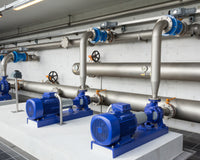
In multi-family and commercial buildings, we use systems of 2-4 pumps with cascade control. This type pressure increasing pumps allow for water pressure strengthening and maintaining the set value under variable load - this effective pressure raising during rush hours and quiet at night.
5. Selection of the device - how not to overshoot?
- Specify water source parameters (minimal water pressure and available water flow z water supply network or from a well).
- Sum typical and peak water consumption (number of collection points). It conditions increasing the amount of water during the peak.
- Define target appropriate pressure level at the furthest point (e.g. 3 bars on the top floor) - that's yours optimal water pressure.
- Decide if local is enough increasing water pressurewhether a central one will be necessary installation of a lifting pump in the boiler room.
If in doubt, let us choose pressure boosting pump to specific installation resistances - we know from experience that this shortens start-up and ensures effective pressure raising without "waving" parameters.
6. Installation and commissioning - manufacturer's best practices
6.1. Installing the lifting pump
- Provide strainers upstream, a non-return valve and an expansion vessel on the discharge side - this stabilizes working pressure and makes it easier maintaining water pressure.
- Use vibration dampers and flexible connections to reduce the transmission of noise to the structure.
- Verify the automation settings: set point, start/stop thresholds - it's real blood pressure improvement with minimal energy consumption.
6.2. Hydrophore - what to pay attention to?
- Select the tank capacity to home water installation (number of inhabitants, collection points). Too small a tank = more frequent cycles, shorter cycles service life automation.
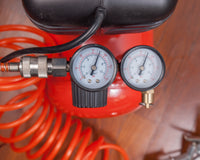
- Control the nitrogen/air pre-pressure in the diaphragm - this is a requirement to maintain appropriate water pressure and not "lose" working pressure at conscription.
- Ensure easy service access to the pressure switch, pressure gauge and drain valve.
7. Operation: how to maintain the effects for years
- Regularly checking the filters, rinsing the bed and inspecting the reducer - it's simple blood pressure improvement no investment.
- Periodic checking the pressure level (set input/output) allows for early detection pressure drop and react before it appears insufficient water pressure.
- After changes in the system (new points, increasing the amount of water) reconsider water pressure regulation in pump automation.
8. Diagnostic table - from symptom to action
| Symptom | Potential cause | Action |
|---|---|---|
| Weak water pressure in the shower | Dirty filter, choking on the reducer | Clean filters, correct valve adjustment, set optimal water pressure |
| Big fluctuations water pressure | Tank too small, no modulation | Select a larger hydrophore / speed control (constant pressure) |
| No water on the top floor | Too low Power supply z water supply network, large losses on verticals | Consider installing a pump central (booster), diameter correction |
| Noisy operation after modernization | Bad anchoring, no silencers | Add flexible connections, correct mountings |
Frequently asked questions (FAQ)
Is small enough? pressure booster pump for the shower?
Yes, if the source guarantees minimal water pressure level and flow. Local pressure boosting pump corrects comfort of using the pressure in a specific bathroom. When low pressure problem applies to the entire apartment or house, a central one will be more effective increasing pressure.
When to choose hydrophore instead of just the pump?
When you need more than just that increasing water pressure, but also a stable flow "buffer" and operation with weak power supply water supply network or from your own take. The hydrophore set maintains constant pressure and limits the frequency of switching on.
Is it a favor? high water pressure is a problem?
Yes - excessive pressure shortens the life of the fittings. If your input is above 5-6 bar, use a reducer to set it appropriate pressure level (e.g. 3 bar) and protect the installation.
Where to buy devices and pumps IPRO?
Our products IPRO you can buy on B2B platform. If you are an end customer, we encourage you to check out ours partner stores and wholesalers. You can also always contact us: +48 22 721 11 92, biuro@dambat.pl.
Summary
First the diagnosis (causes of low water pressure), then removing the chokes and making minor adjustments. If that's not enough, central or local installation of a lifting pump and well selected hydrophore they will provide effective pressure raising, stable working pressure and tall comfort of water use for years.