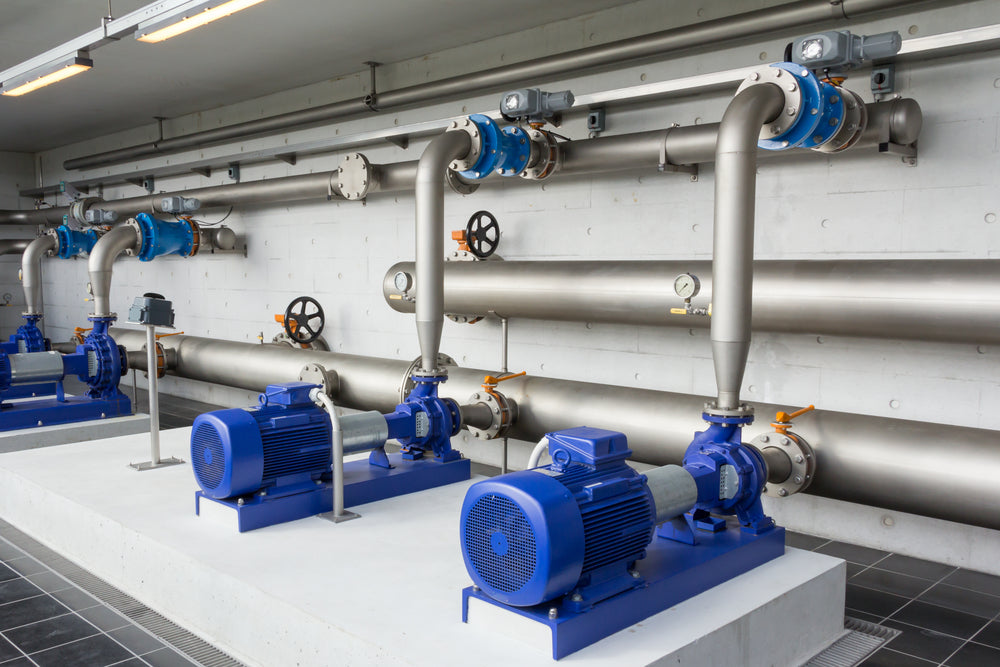
The circulation pump is a type of centrifugal pump and is used to cause the flow of liquids in heating and cooling installations. In other words, the circulation pump forces water circulation. This phenomenon was first used in 1929. The most important element of the circulation pump is the motor, which drives the shaft and impeller. In traditional glanded pump models, the motor is separated from the liquid. Nowadays, however, glandless pumps are much more popular - wet-running or high-efficiency ECM technology pumps with an electronic motor.
How does a central heating pump work?
Pressurized heating systems use circulation pumps to force water circulation. Central heating circulation pump significantly improves the operation of the heating installation. When using it, there is no need to use large-section pipes or install the boiler in the basement. The circulation pump can be immediately built into the boiler. Otherwise, you need to buy the pump yourself, but its installation is not complicated. Central heating pumps are compact and lightweight. The principle of their operation is based on creating a pressure difference between the inlet and outlet of the pump. Water is sucked in from the boiler by the pump. The stainless steel impeller is driven by a motor and transfers potential and kinetic energy to the liquid. This increases its pressure and speed.
In the cast iron pump body, kinetic energy is converted into potential energy, which means the pressure increases even more. Thanks to it, it is possible to activate the circulation of water that circulates in the heating pipes and reaches the radiators. In single-family houses, glandless pumps are used, in which the motor is immersed in the liquid. Their durability is approximately 15-20 years. Central heating circulation pump should be equipped with an automatic air vent valve and a mesh filter. Remember that filters should be cleaned regularly! Modern central heating circulation pumps not only increase the comfort of using the installation, but also enable reduction of up to 50% of electricity consumption.
How to choose the right circulation pump?
Glandless circulation pumps for central heating do not require maintenance, lubrication or replacement of seals. However, it is very important to select their parameters correctly, because installing a pump that is too small or too large will have negative financial and operational consequences. A circulation pump that is too large will draw a disproportionate amount of power and its parts will wear out faster than they should. However, choosing a pump that is too small may make it difficult for the installation to force the necessary water flow, which will result in underheating of the rooms. The most important parameters to pay attention to are efficiency, pump pressure, power consumption, rotor speed and noise level. The parameters of the circulation pump should be adjusted to the length of the pipes, the number of radiators and the resistance of the installation. The pump capacity, i.e. lifting height and flow rate, should be specified in the installation design. If the investor does not have such information, it will be best to use the help of a specialist when making calculations.
Please remember that pumps with higher efficiency will be needed in the case of underfloor heating and in multi-story houses. It is worth choosing electronically controlled circulation pumps that can automatically regulate engine speed. Such pumps are recommended for installations with thermostatic valves. Speed regulation usually has three or four stages. The pump should run at the highest speed most of the time. The power consumption parameter will determine the operating costs. Rational operation of the boiler will only be possible if the parameters of the circulation pump are correctly adjusted to the requirements of the heating installation.