Pumps with a frequency converter and ready-made sets for increasing water pressure
Pressure fluctuations are one of the most common problems in home water installations. All it takes is for someone to take a shower and start the dishwasher in the kitchen, and the stream at one of the points becomes noticeably weaker. In systems controlled by a regular pressure switch, this is the natural order of things: the pump turns on and off intermittently, and the pressure constantly fluctuates between two thresholds. However, it can be stabilized - and that's what it's for inverter, i.e. a frequency converter that smoothly adjusts the engine operation to how much water you draw at a given moment.
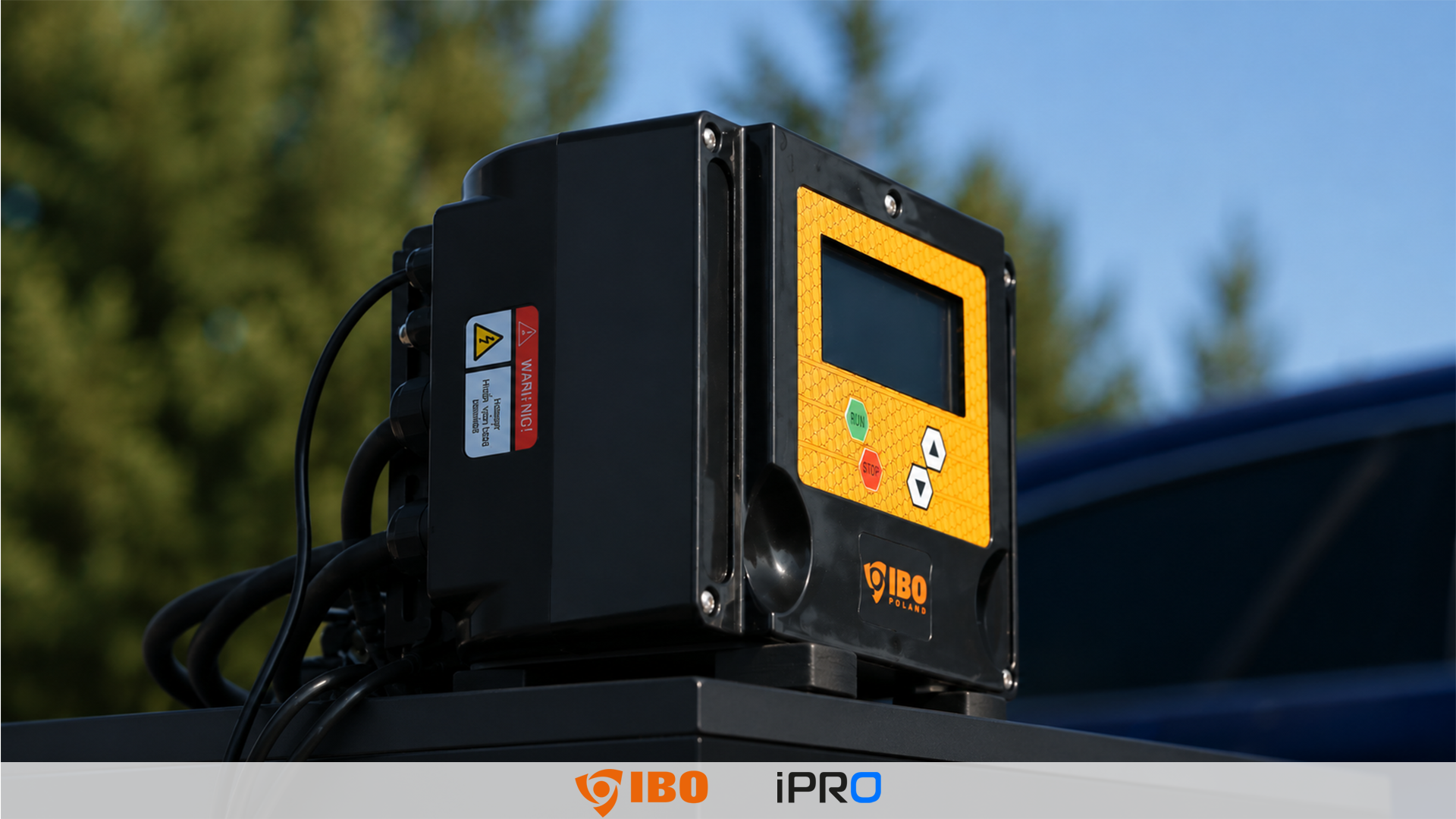
Our offer includes IBO and IPRO the inverter is often not a separate addition, but part of a ready-made solution - an intelligent pump with built-in control or a complete pressure boosting set. In this article we explain how an inverter works, what it actually gives you at constant water pressure and how to choose between a single pump or a ready-made set.
How does a pump inverter work - and how does it differ from a pressure switch?
An inverter - also known as a frequency converter or frequency converter - changes the frequency of the voltage supplying the motor. Since the engine speed is related to the frequency, the device smoothly regulates the revolutions, and with them the flow and lifting height. Therefore, the pump does not work in the "on or off" mode, but maintains the speed exactly as required by the current consumption.
This is the difference from a pressure switch. The pressure switch turns the pump on at the lower threshold (e.g. 2.5 bar) and turns it off at the upper threshold (e.g. 3.5 bar), so the pressure constantly fluctuates in this range. The inverter reads the current pressure from the sensor and automatically corrects the revolutions to maintain one set value - regardless of whether one or several intake points are open. This means noticeably different comfort and more stable pump operating parameters.
Constant water pressure - what do you really gain?
The most important benefit is felt on a daily basis: constant water pressure throughout the installation. Maintaining a constant pressure means that the shower does not lose power when someone uses the tap in another room, and the garden irrigation system runs at the same stream morning and evening. Instead of jumps, you get stable water pressure, set once to suit your needs.
In installations with longer pipelines or several receivers operating simultaneously, this also has a technical dimension. Smooth pressure raising eliminates water hammer associated with hard pressure switch engagements, which reduces the load on fittings, valves and the pump itself. Fewer sudden changes translate directly into calmer and longer operation.
Inverter and hydrophore set - do you still need a large tank?
Hydrophore set and a smart pump with an inverter are two different - although in both cases automatic - ways to maintain pressure. In the pressure booster set, the operation is controlled by a pressure switch: the pump starts when the pressure drops to the lower threshold and turns off when it reaches the upper threshold, and the expansion vessel stores a supply of water between cycles. The solution is simple and reliable, but the pressure naturally fluctuates within the pressure switch setting range.
The pump with an inverter works differently: instead of turning on and off, it smoothly regulates the engine speed so as to constantly maintain one set pressure value - without storing water in a large tank, because the role of the regulator is taken over by the electronics. The difference comes down to the effect: on the inverter side, more stable pressure and smaller dimensions, on the hydrophore set side - proven simplicity and water reserve in the vessel.
Energy saving and pump protection
The inverter also means real energy savings. Dynamically changing engine speeds, depending on water demand, can significantly reduce electricity consumption. Energy-saving pumps with an inverter accelerate to full efficiency only when necessary - when, for example, only one consumption point is open, the pump operates with lower power.
The second advantage of the inverter is device protection. Soft start limits starting currents and mechanical load at startup, and most of our inverter systems have built-in protection against dry running and overload. Fewer hard starts and elimination of "dry" operation extend the failure-free operation of the submersible pump.
Where the inverter works - applications and selection
The use of an inverter makes the most sense where water consumption is variable and constant or higher pressure is particularly important:
- Single-family houses with a garden — comfort of use and efficient irrigation system without pressure drops.
- Farms and irrigation of farmlands — stable operation with variable demand from many receivers at the same time.
- Installations with a long pipeline – where lifting efficiency and maintaining pressure at the end of the route are important.
- Facilities operating in continuous mode — here we use professional submersible pumps from the line IPRO and equipment with increased durability.
The inverter itself is selected primarily according to the power and power supply of the engine (230 V and 400 V versions), and the operating point of the system - to the maximum intake capacity and the required pressure. Therefore, it is always worth starting with the parameters: well depth, dynamic water table and real demand, which you will estimate with ours water demand calculator. IBO pump models with inverters and compatible accessories can be found in the catalog on the website. If you have any doubts when selecting a device, we encourage you to do so contact our technical department.
Dambat – a trusted manufacturer of pumps and hydrotechnical equipment with quality certificates.
Frequently asked questions (FAQ) – submersible pump with a frequency converter
Where to buy a submersible pump with an IBO or inverter IPRO?
As a manufacturer, we do not sell directly to end customers. IBO i submersible pumps and inverters IPRO are available from our authorized sales partners, installation wholesalers and online distributors in Poland. We described the details in the entry how to order IBO i pumps IPRO.
Can I buy just the inverter for an existing pump?
Yes, the inverter can be added to an existing installation - provided it is matched to the power and voltage of the motor (230 V or 400 V) and the characteristics of the pump. If in doubt, our technical department will help verify whether a given system will work properly. Check out the offer inverters on our website.
What is the difference between an inverter and a pressure switch?
The pressure switch turns the pump on and off within two pressure thresholds, which causes the pressure to constantly fluctuate. The inverter smoothly regulates the engine speed based on the sensor reading, thanks to which it maintains one set, constant water pressure regardless of the number of open draw-off points.
Does the inverter protect the pump against dry running?
The inverter itself does not, but in most of our inverter systems dry running protection and overload protection are built in at the factory. The inverter provides soft starting, which limits starting currents and mechanical loads - which translates into longer operation of the submersible pump.
Does the inverter provide real energy savings?
Yes. According to the laws of pump similarity, power consumption decreases approximately with the third power of rotational speed, so operating at lower revolutions with lower consumption significantly reduces energy consumption. Energy-saving inverter pumps avoid unnecessary acceleration to full capacity when it is not needed.